
Full-Day Private Guided Experience
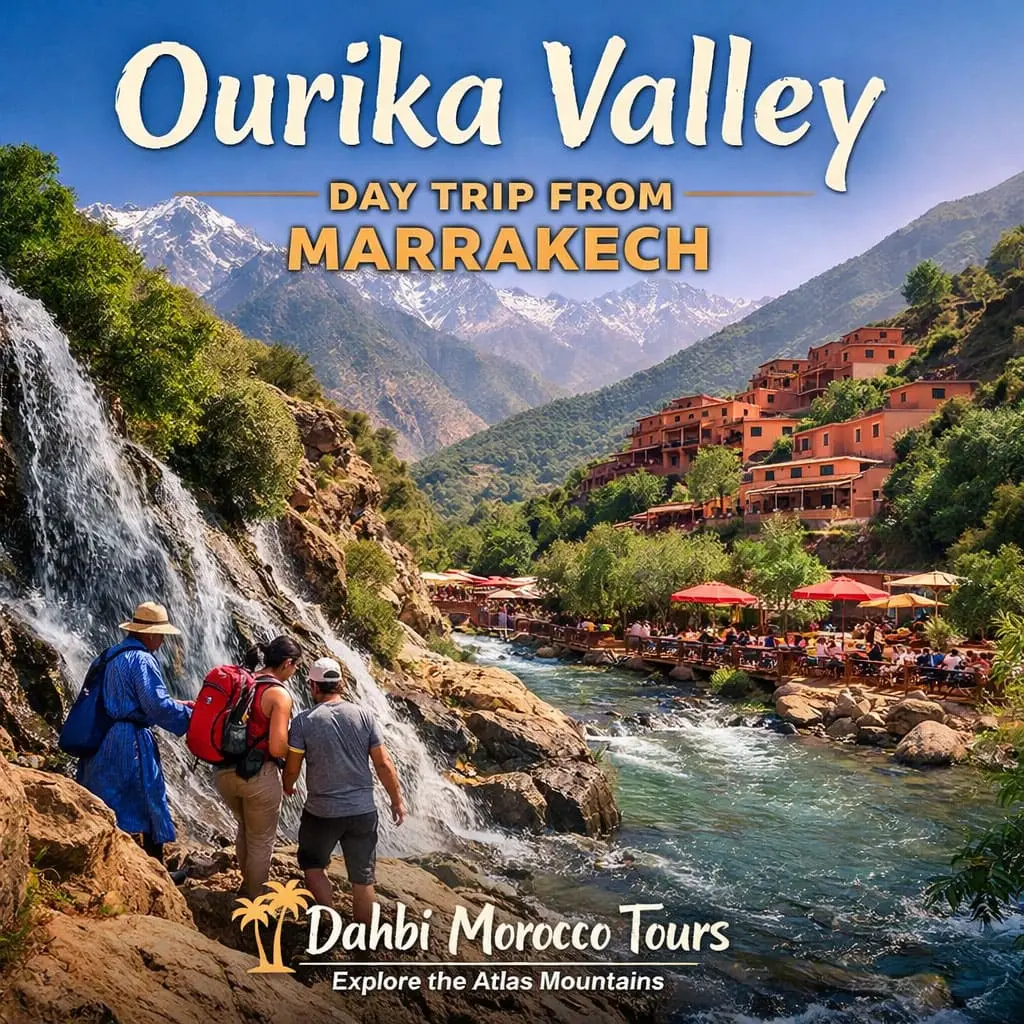
Ourika Valley Day Trip from Marrakech
Want to get away from the hustle and bustle of Marrakech and see Morocco’s mountains in just one day? Our day trip from Marrakech to the Ourika Valley is the perfect mix of nature, culture, and comfort.
With Dahbi Morocco Tours, you’ll see the High Atlas Mountains through the eyes of local experts who know every twist and turn, hidden viewpoint, and real village along the way. This isn’t just a ride to the mountains; it’s a carefully planned experience based on years of experience leading travelers from the US, UK, and other parts of Europe.

4.9 out of 5 Based on 339 reviews.
Duration:
Full day — 8 AM to 6 PM
Distance:
~65 km from Marrakech
Group Type:
Exclusively private
Languages:
English · French · Arabic
Pickup:
Your Marrakech hotel or riad
The Destination
Discover the Beauty of the Ourika Valley in One Perfect Day
Where Is the Ourika Valley?
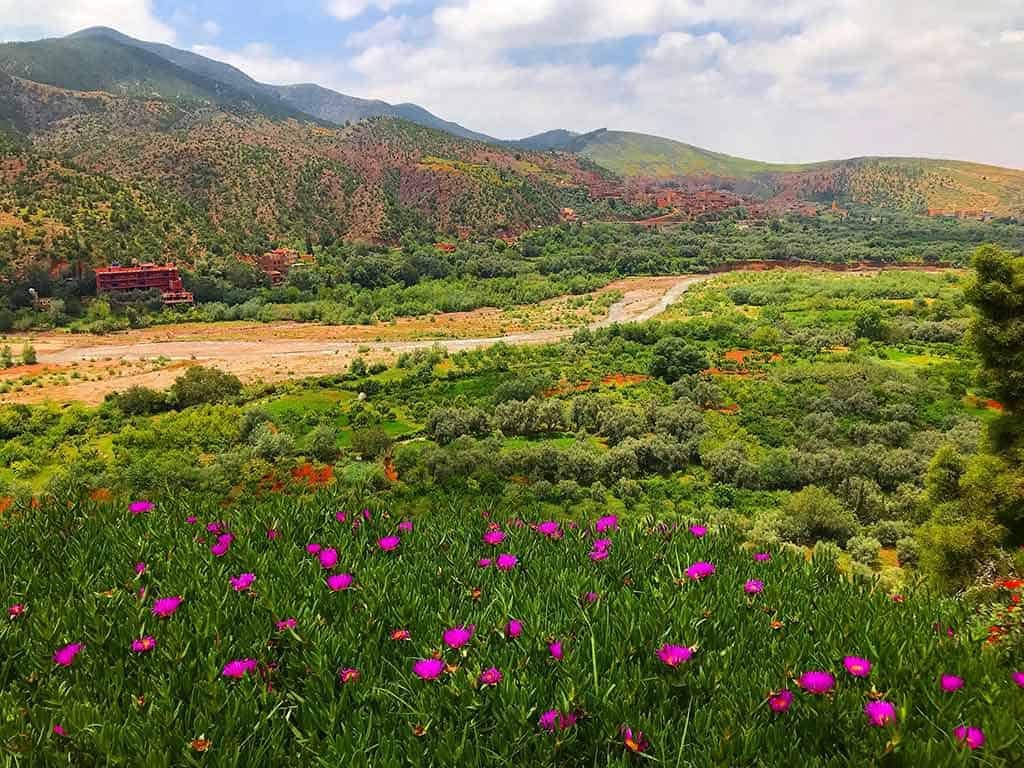
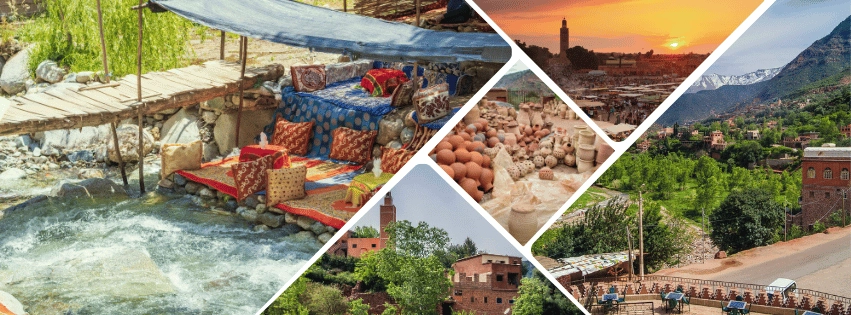
The Ourika Valley lies about 30–40 km south of Marrakech, at the foothills of the majestic Atlas Mountains. As you leave the city behind, the scenery transforms into green terraces, red-earth hills, walnut groves, and traditional Berber villages clinging to the mountainsides.
At the heart of the valley is the village of Setti Fatma, famous for its refreshing waterfalls and riverside atmosphere.
What Makes the Ourika Valley Different
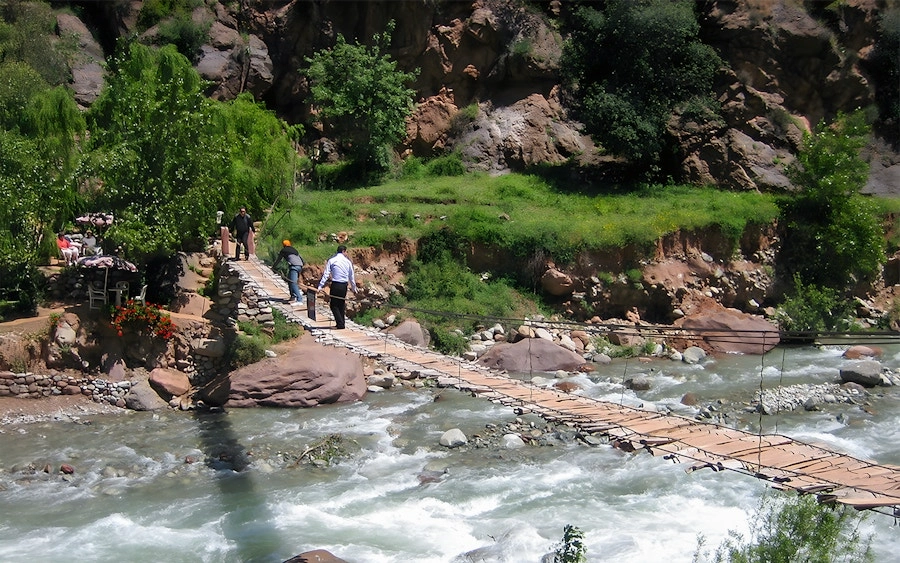
The Ourika Valley is different from some of the more popular trips from Marrakech in that it has kept its authenticity, which is becoming less and less common in popular places. The gorge still has a cold, green river running through it. Women still wash clothes on the flat rocks under the bridge. Berber farmers still grow maize, onions, and walnut trees on terraced plots in the shadow of 4,000-meter peaks.
The valley has real cultural access as well as natural drama like waterfalls, mountain views, and a fast-moving river. With a good guide, you don’t have to look at Berber life from behind a fence. You are drinking mint tea in a family courtyard, learning what is in a tagine before it is served to you, and hearing how people in the Atlas Mountains have dealt with years of isolation and change.
The Gallerie
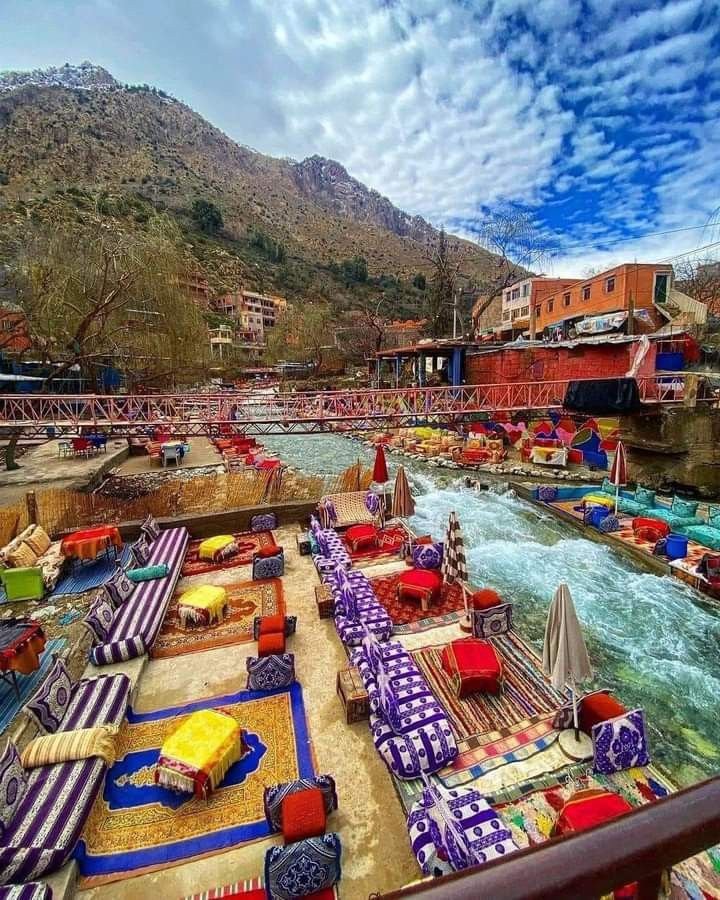
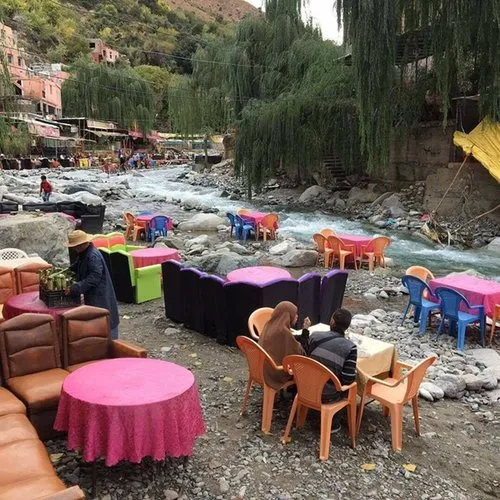
Real photo from previous Ourika Valley Day Trip
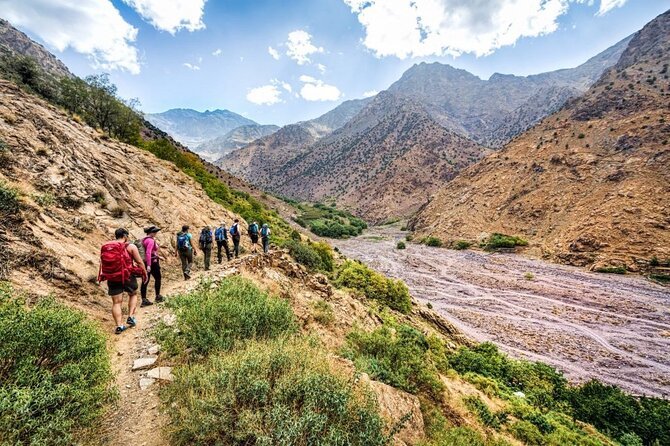
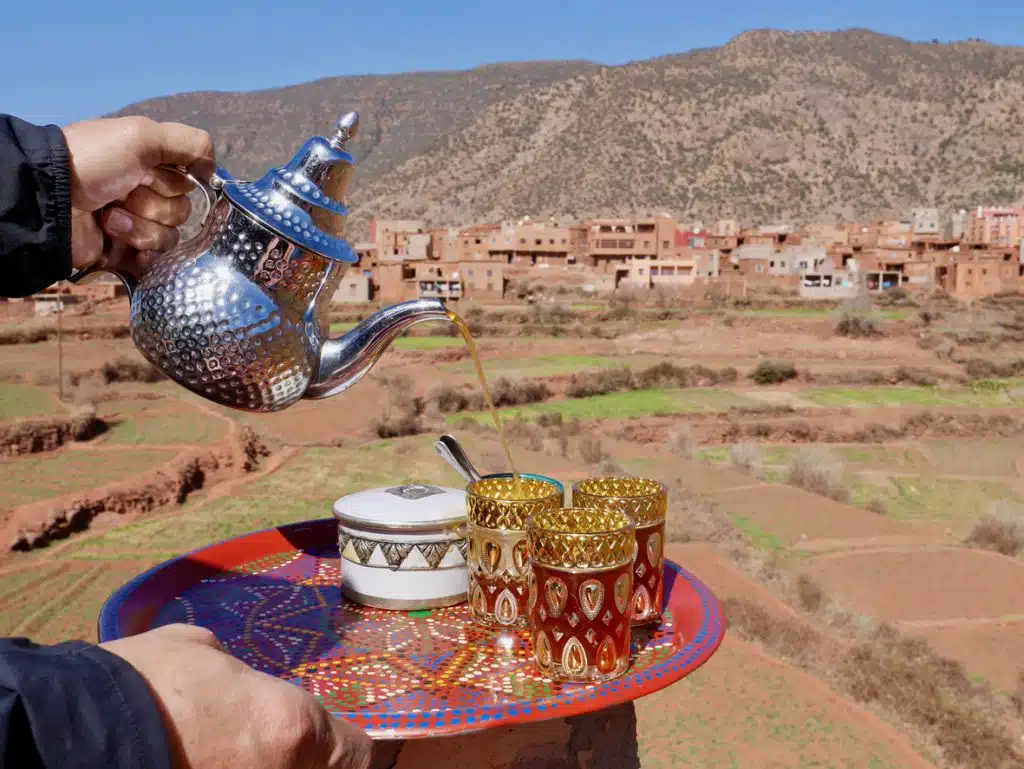
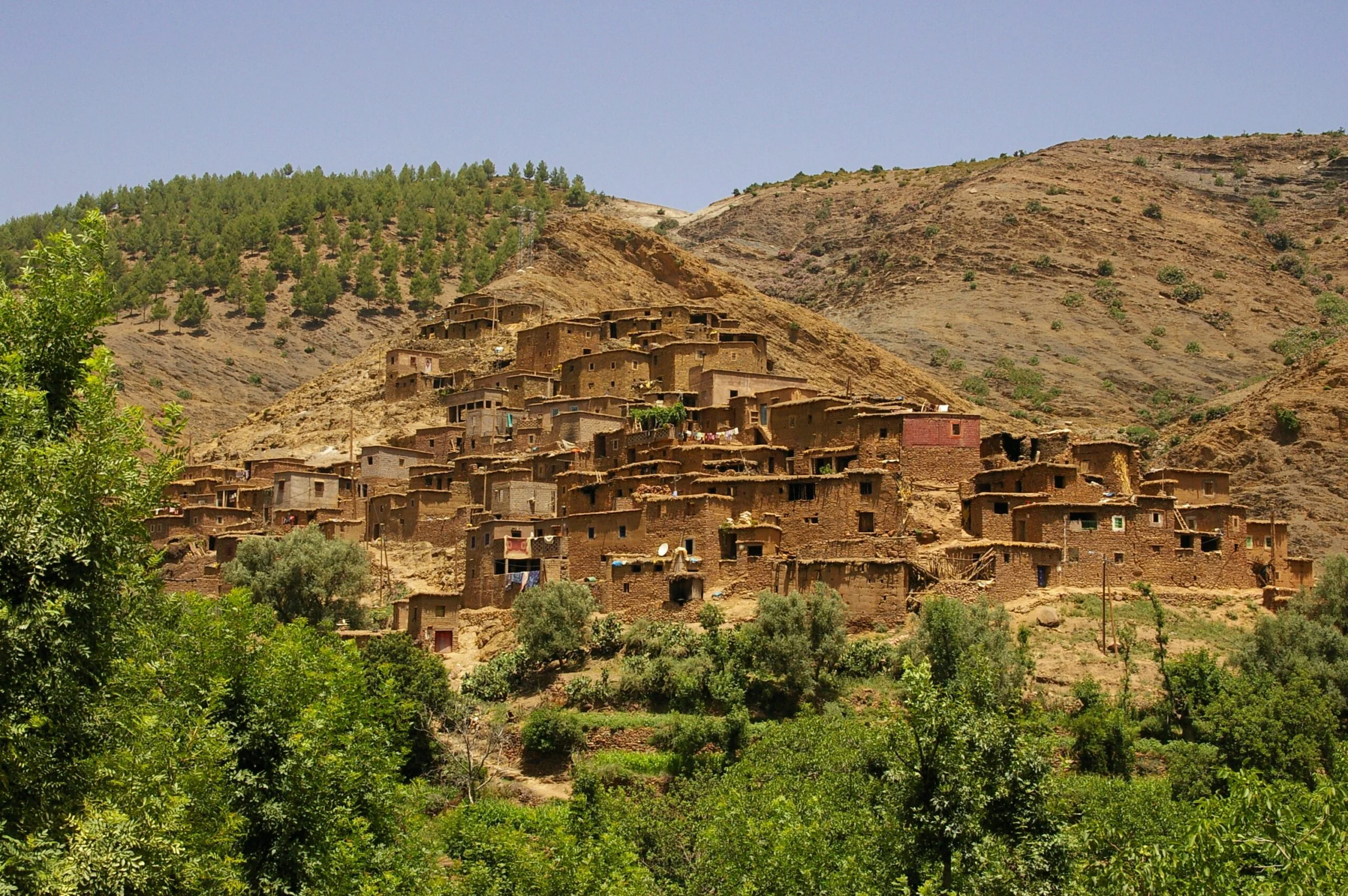
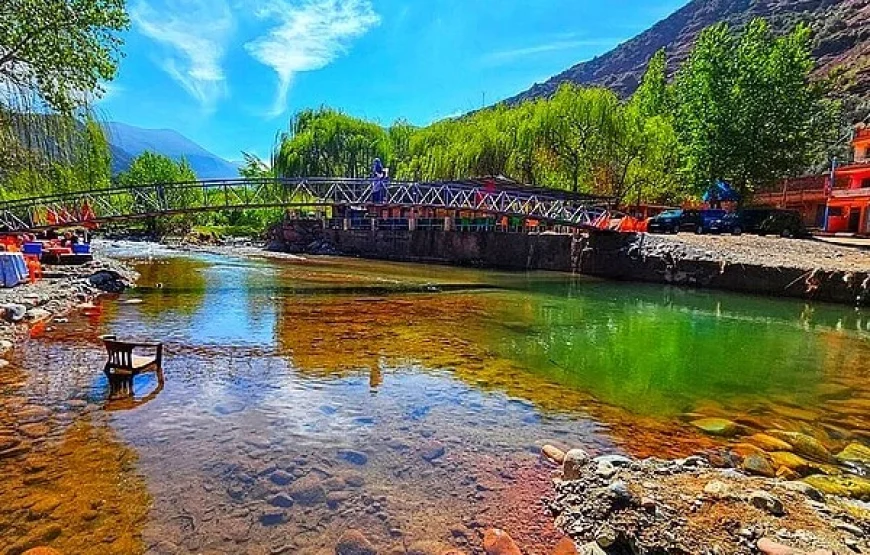
The Day, Hour by Hour
Your Complete Ourika Valley Day Trip Itinerary
All times are approximate and adapt naturally to your group's pace and the season. Private tours depart on your schedule; small-group tours keep numbers low enough that the rhythm remains personal
Your guide meets you directly at your riad, hotel, or designated meeting point. No chaotic group assembly in a car park — introductions are made, water and dates are offered, and you are on the road within minutes. Private tours depart at your chosen time; small-group tours keep to an 8:00 AM schedule that ensures you arrive in the valley before the midday heat.
The drive itself is part of the experience. As Marrakech recedes, the landscape opens into a broad agricultural plain before the road begins its gradual climb into the foothills. Your guide points out key landmarks — the olive groves of Tahanaout, the ancient caravanserai ruins visible from the roadside, and the first glimpses of the river that has shaped this valley for millennia. This is not background noise. It is context that makes everything you see later more meaningful.
The moment the valley properly opens up, the reaction is usually the same: a sharp intake of breath. The Ourika River runs fast and translucent along the valley floor, flanked by tiered green terraces and, on the far side, dramatic red-rock cliffs that catch the morning light at an extraordinary angle. Villages cling to the slopes in clusters of earth-toned houses. Your guide allows time to simply stand and take it in before the day continues.
If your visit falls on a Monday, the weekly Berber market in Tnine Ourika is a raw, unfiltered spectacle unlike anything available in Marrakech's tourist-facing medina. Spices sold by the scoop, livestock changing hands, women from surrounding villages selling handwoven baskets and dried herbs. Completely untouristy, completely authentic, and utterly compelling.
The main village of Setti Fatma is where the trail to the famous cascades begins. Your guide leads you through the village itself before the waterfall hike — pointing out the flour mill still powered by the river, the communal bread oven used every morning, the vegetable gardens terraced into the near-vertical slopes above the river bank. The walk to the trailhead is itself a gentle introduction to Berber agricultural life.
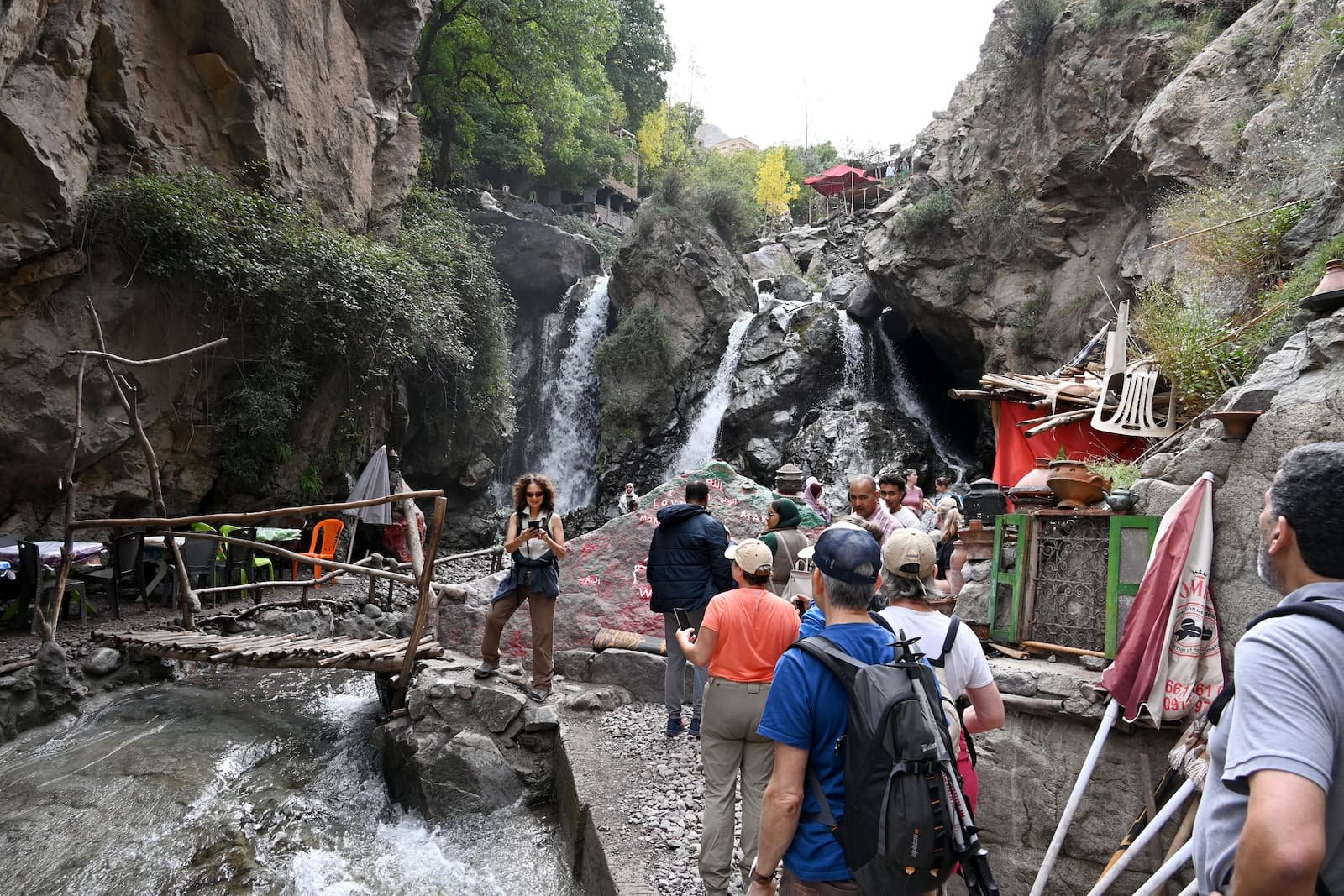
There are seven cascades above Setti Fatma, accessible via a trail that begins at the river's edge and climbs steeply through fig trees, oleander, and rocky scrambles. Most visitors reach the first and second falls within 20 to 30 minutes of steady walking — these alone justify the journey. The trail crosses the river twice on stepping stones. Fit hikers who want to continue can reach the upper falls in another 45 minutes, where the crowds thin considerably and the views back down the valley are outstanding. Your guide assesses conditions on the day and ensures you take the safest, most scenic route based on your group's fitness.
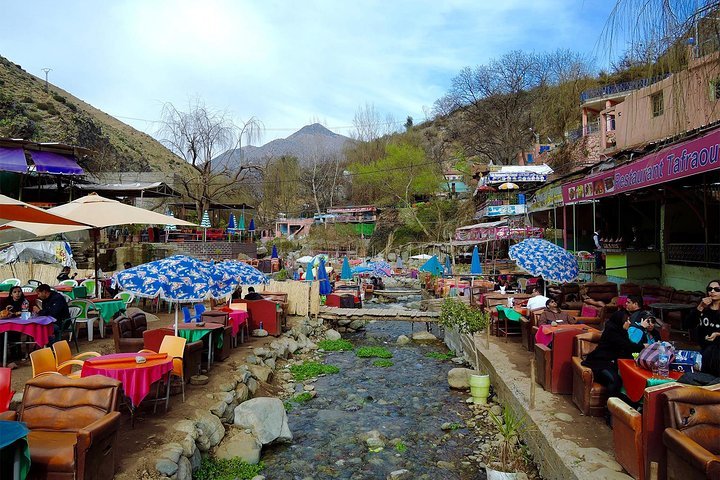
Lunch in the Ourika Valley is one of those travel experiences that people talk about for years — not because of Michelin stars, but because of the setting, the simplicity, and the flavour of food eaten exactly where it belongs. Riverside restaurants built on wooden platforms over the rushing water serve slow-cooked lamb or chicken tagine with preserved lemon and olives, harira soup with bread still warm from the communal oven, and fresh seasonal salads dressed with argan oil. The sound of the river, the dappled shade, and the mountains overhead make even a simple meal feel extraordinary.
Our guide has established long-standing relationships with local families, which means you are welcomed as a guest rather than observed as a tourist. You may see a traditional Berber kitchen with its clay oven and dried herbs hanging from the rafters. You may meet a weaver working on a loom that uses techniques unchanged for three generations. You may be invited to sit and share tea while a family elder explains the agricultural calendar that still governs daily life in the valley. These moments are not staged. They are the result of years of trust-building between Dahbi Morocco Tours and the communities we work with.
A certified organic botanical garden dedicated to the medicinal and aromatic plants of the Atlas region — lavender, rosemary, thyme, artemisia, and dozens of lesser-known species used in traditional Amazigh medicine for centuries. A guided 45-minute walk through the garden provides a fascinating counterpoint to the more dramatic landscape experiences of the day. The on-site shop sells pure essential oils and dried herbs at producer prices.
The return drive through the valley foothills, with the afternoon light catching the red-rock cliffs and terraced fields at angles you did not see on the morning journey. Additional stops at viewpoints as light and time allow. Arrival in Marrakech between 5:45 and 6:30 PM — drop-off directly at your hotel or riad, with enough time for a shower, a change of clothes, and an evening in the medina if you choose.
The Experience
Ourika Valley's Must-See Highlights
Setti Fatma Waterfalls
Seven cascades above the village of Setti Fatma, accessible via a trail through fig trees and rocky scrambles. The first and second falls take 25–30 minutes to reach and are genuinely spectacular in any season. Spring snowmelt transforms them into something extraordinary. The upper falls reward the extra 45-minute climb with views that put the entire valley in perspective.
The Ourika River
The fast-moving, translucent river is the spine of the entire valley — cold, green, and audible throughout the day. Crossing it on stepping stones to reach the waterfall trail is one of those simple travel moments that stay with you. The river pools below Setti Fatma are a natural swimming spot in summer; the sound and visual drama of the water against red rock is the valley's signature experience in every season.
Berber Village Life
The Ourika Valley's Berber communities have inhabited these slopes for centuries, farming terraced plots of maize, onions, and walnut trees in methods largely unchanged since medieval times. A guided village visit — conducted with genuine care and existing local relationships — provides access to family courtyards, traditional kitchens, weaving workshops, and conversations that no independent tourist could easily arrange.
Traditional Riverside Lunch
Riverside restaurants built on wooden platforms over the rushing Ourika River serve traditional Berber dishes cooked over wood fires. Slow-cooked tagine, freshly baked bread, harira soup, and seasonal salads dressed with local argan oil — all with the river rushing beneath your feet and the Atlas peaks framing the view. One of the most memorable lunch settings available on any day trip from Marrakech.
The Atlas Mountain Panoramas
The High Atlas Mountains reach 4,167 metres at Jebel Toubkal — Africa's highest peak north of the Sahara. The Ourika Valley road runs directly through the foothills, with multiple stopping points that frame snow-capped peaks, red-rock cliff faces, and terraced valley floors simultaneously. The morning light on the mountains during the drive out of Marrakech is a photography opportunity that consistently surprises guests.
The Tnine Ourika Monday Market
The weekly Berber market held every Monday in the valley is one of the most authentically local experiences available on the Ourika route — livestock trading, spice sellers, village women exchanging handcraft work, and the general commerce of a community that has been gathering in this spot for generations. If your tour falls on a Monday, this is a highlight not to skip.
Our Promise
Why Book Your Ourika Valley Tour with Dahbi Morocco Tours?
There is no shortage of companies offering Ourika Valley excursions from Marrakech. The question is not whether you can get there without us — of course you can. The question is what kind of day you want to have when you arrive.
Local Knowledge No Guidebook Replicates
Our guides and drivers are Marrakchi by birth or long adoption — Arabic and Berber speaking, deeply familiar with the cultural nuances that shape every interaction. When a craftsman wants to show you a technique rather than a finished product, our guide recognises the invitation and facilitates it.
Private Means Private — No Exceptions
There is no scenario in which we add another couple to fill the vehicle or combine bookings for operational convenience. The vehicle and guide you engage with are yours exclusively. Research consistently shows that private guided tours generate significantly higher satisfaction — not because the sights are different, but because the attention and timing are incomparable.
Our Vehicles, Our Standards
Every vehicle is owned by us, regularly maintained, and inspected before each tour. Our drivers hold current Moroccan commercial licences and are trained in customer service, first aid basics, and cultural mediation. They carry water, a first aid kit, and contact details for every clinic along the route. We do not cut corners.
Transparency
Everything Included — and Everything That Isn't
We believe that transparent pricing is the foundation of trust. Here is a clear, complete breakdown.
What's Included:
- Hotel or riad pickup and drop-off in Marrakech
- Air-conditioned private vehicle appropriate to your group size
- Certified English-speaking local Atlas Mountain guide
- Guided waterfall trail and safety briefing at Setti Fatma
- Traditional Berber riverside lunch at a partner restaurant
- Guided Berber village visit with cultural commentary
- All local guide fees and trail entrance contributions
- Bottled water throughout the day
- All fuel, tolls, and parking
Not Included (and Why):
- Alcoholic beverages at the riverside restaurant
- Personal shopping at the market or artisan workshops
- Gratuities for your guide and driver (discretionary, always appreciated)
- Jardin Bio Ourika entrance fee (optional add-on)
- Travel insurance (we strongly recommend purchasing before arrival)
Optional Add-Ons: Jardin Bio Ourika botanical garden · Extended hike to upper waterfalls · Monday Berber market visit · Camel ride in the valley · Photography-focused itinerary · Combined Agafay Desert or Ouzoud Waterfalls tour
Practical Guide
Everything You Need to Know Before You Go
How Far Is Ourika Valley from Marrakech?
The Ourika Valley begins approximately 30 km southeast of Marrakech and extends for roughly 60 km into the Atlas foothills. The main village of Setti Fatma, where most visitors head for the waterfalls, sits about 65 km from the city centre. Under normal traffic conditions, the drive takes 60 to 75 minutes each way — making it the closest major natural excursion available from Marrakech. The route follows the P2017 road through Tahanaout and Tnine Ourika, passing through several small market towns that are worth a brief stop in their own right.
What to Wear and Bring
A good pair of walking shoes or lightweight hiking boots is the most important thing you can bring. The trail to the waterfall is rocky, uneven, and wet in some places. Wearing sandals or flat-soled shoes makes it a lot harder and more dangerous. Wear comfortable layers on top of your shoes. The valley is always cooler than Marrakech, but the sun can still be strong in the middle of the day. In all seasons except the hottest part of summer, you should wear a light jacket or fleece.
When you visit Berber villages, it’s polite to dress modestly. For the lower half, lightweight long pants or a wrap are both respectful and useful for the trail. Bring 1.5 to 2 liters of water per person (you can get more in Setti Fatma), sunscreen with a high SPF, a small amount of Moroccan dirhams for souvenirs, and a reusable bag for anything you buy at the market or botanical garden.
Is the Waterfall Hike Difficult?
The hike to the first two waterfalls requires a moderate level of fitness — think of a brisk uphill walk on uneven, rocky terrain rather than a technical mountain climb. The ascent takes 25 to 35 minutes at a comfortable pace. The return is somewhat easier but requires care on loose rocks. Guests with limited mobility or knee concerns often choose to enjoy the river and village at the base while more mobile members of the group complete the hike, which works very well. We never pressure anyone to go further than they are comfortable with.
Private Tour vs. Group Tour
Private tours offer complete flexibility — you depart when you choose, stop as long as you like at each location, and the itinerary adapts entirely to your group’s interests. They are ideal for families, couples, photographers with specific timing needs, or anyone who prefers a more personal experience. Small-group tours (maximum 8 guests) share the cost and often create unexpected social connections with fellow travellers. Both formats use the same guides, vehicles, and restaurant partnerships. The experience is equally excellent — the choice comes down to budget and preferred travel style.
Reserve Your Experience
Book Your Ourika Valley Day Trip from Marrakech Today
Book your Ourika Valley day trip from Marrakech today — and arrive back in the city with waterfalls, Berber hospitality, and mountain air already behind you. The valley is waiting.
Questions
Frequently Asked Questions
Everything you need to know before booking your Ourika Valley day trip from Marrakech.
The Ourika Valley begins 30 km southeast of Marrakech. The main village of Setti Fatma — where the waterfall trail starts — is approximately 65 km from the city centre. Under normal conditions the drive takes 60 to 75 minutes each way along the P2017 road through the foothills of the High Atlas. It is the closest major natural excursion from Marrakech, and the drive itself is interesting enough that the time passes quickly.
Absolutely — and it is often children who respond most enthusiastically. The waterfall hike is manageable for children aged seven and above who are comfortable on uneven terrain. Younger children can be carried on the easier lower section. The river pools near the village are irresistible on warm days. Berber village visits tend to be particularly engaging for curious young travellers — local children often appear to say hello, and the organic garden's plant identification activities hold attention surprisingly well. Let us know the ages of children in your group when booking and we will tailor the pace accordingly.
The hike to the first two waterfalls requires a moderate level of fitness — a brisk uphill walk on uneven, rocky terrain that takes 25 to 35 minutes at a comfortable pace. It is not technically demanding, but it is steep and the terrain is uneven. The trail crosses the river twice on stepping stones, and in spring or after rain, water levels can be high. Good footwear is essential — sandals and flat-soled shoes are genuinely inappropriate. Guests with limited mobility often enjoy the village and river at the base while more mobile members of the group complete the hike.
The valley is accessible and rewarding in every season, but the experience shifts dramatically. Spring (March–May) is peak season for waterfalls when snowmelt makes the Setti Fatma cascades spectacular. Summer brings cooler mountain temperatures vs Marrakech's 38°C heat. Autumn is many experienced travellers' favourite — golden light, eased crowds, and lively harvest markets. Winter delivers moody mountain scenery and snowcapped peaks that are extraordinary on clear days. We have never had to cancel an Ourika Valley tour entirely due to weather.
Yes — a traditional Berber lunch at a partner riverside restaurant is included in the standard tour price. The meal typically includes a tagine (lamb or chicken with preserved lemon and olives, or vegetable for non-meat eaters), harira soup, freshly baked bread from the communal oven, seasonal salads dressed with local argan oil, and mint tea. The setting — on a wooden platform over the rushing Ourika River, with the Atlas peaks overhead — makes it one of the most memorable meals on any Morocco itinerary. Dietary requirements are accommodated with advance notice.
The primary language in the Ourika Valley is Tamazight (Amazigh), the ancient Berber language of the Atlas Mountains. Most residents also speak Moroccan Arabic (Darija), and those who work with tourists often have basic French. Your Dahbi Morocco Tours guide is fluent in English and Arabic, with conversational Amazigh — which means introductions in villages carry genuine warmth rather than the stilted awkwardness of pure translation.
A small informal contribution — typically 10 to 20 Moroccan dirhams per person — is collected at the start of the waterfall trail by local guides who maintain the path and provide basic safety oversight. This is not an official government charge but is customary and contributes directly to the local economy. Your Dahbi Morocco Tours guide handles this on your behalf and explains the context. No other entrance fees apply to the standard itinerary.
Yes — and several combinations work well. The Agafay Desert pairs naturally with Ourika as a two-day combination: one day in the green Atlas valley, one evening under stars in the stone desert south of Marrakech. The Cascades d'Ouzoud (Morocco's tallest waterfalls) make for a longer full-day excursion further north. The Ait Benhaddou and Draa Valley road trip is a full-day or overnight journey through southern Morocco's most iconic landscape. Ask us about multi-tour pricing when booking.
About us
DAHBI MOROCCO TORS is a local travel company specializing in private, custom tours across Morocco. We offer authentic experiences, professional local guides, and reliable service trusted by international travelers.
Contact us
What Our Clients Say?
Real customer reviews


500+ reviews
EXCELLENTVerified One of the best experiences Just leaving Morocco after an absolutely spectacular experience with Dahbi. We began our trip in Casablanca and ended in Marrakech. He was so amazing and one of the most memorable parts of the trip! He was incredibly kind and very accommodating. It’s not easy to travel with a toddler and he always kept her happy by finding a cat and always keeping her entertained. She loves cats. We learned a lot about Moroccan life, history, and culture from him. As a travel professional, I was a little anxious about having someone else take care of the trip details, but everything was fantastic. I never allow anyone to take care of my travel arrangements since I am very picky and but I was pleased with the quality of service. Our driver drove us in very comfortable Mercedes minivan. I especially enjoyed our Raid in Dades and the tent in the desert. They were absolutely amazing, as was the food served there. At the desert campsite, we were treated to drumming by local musicians. We were surprised to see Dahbi drumming along with them! It turns out that he’s a man of many talents. The campsite was beautiful. It was a great experience. Dahbi was so knowledgeable and engaging. He also took me to a spa where I had the most amazing Hammam experience and massage. I felt so relaxed and very clean afterwards. Dhabi also took fantastic pictures and videos of my family and I. I highly recommend Dahbi He will provide you with an unforgettable, uniquely Moroccan experience. I miss them and Morocco already.Posted onVerified Amazing memories with the best people! We just come back to Marrakech from our three days tour to Merzouga. I’m been working for a few months with Houssain, he’s amazing! Very responsive, professional and absolutely honest. Although every detail was planned with him, our tour driver and guide was Mohamed. We couldn’t have a more perfect, pleasant and enjoyable trip! Mohamed was a phenomenal driver, we felt safe all the time. He was funny, respectful, professional, knowledgeable. Every detail of the trip was carefully prepared by Houssain, the Sahara camp, ATV ride, camels ride, local food, entertainment, etc. everything was flawless!! I have to be honest planning everything through WhatsApp messages, could be a little risky at times. But you can tell by the reviews, that Houssain and Mohamed represent this company very well! Good job guys! My family and I are thankful to visiting your beautiful Country and have such a wonderful memories with you! Thank you very much!Posted onVerified Increíble experiencia!! Dahbi Morocco tours desde el inicio a nuestra llegada a marrakech con nuestro guía Houssain quién en todo momento nos brindó seguridad en cada visita a los hermosos museos en el primer día. Visita a playa Essaouira una experiencia maravillosa con sus aguas cálidas. Visita y cena en el desierto con un paisaje increíble!! Recomiendo 100% la agencia y al nuestro Guía!!!Posted onVerified Excelente experiencia Muy buena experiencia, recomendable 100% nos hizo un tour en Marrakech, en el desierto, en la playa, por los mercados y los mejores lugares turísticos. Somos 5 amigas que nos sentimos muy seguras y comodas con Dahbi Morocco Tours, también sus conductores fueron muy amables y cordiales con todas nosotras.Posted onVerified Best Tour Company Hi Everyone! I had an amazing experiance with Dahbi Tour company. Throughout the entire trip, they took care of us . They picked my friend and I up from the airport in a reliable car and drove us to Marrekesh . The drivers driving skills were professional as well. All the activities we participated were fun, safe and educational. Our tour guide and driver were extremely professional throughout the trip and had a great personality. We had the chance to see the via hike the Atlas mountains and have lunch at a local Berber house and the food was amazing. Not only that, we went to the Blue City , Marrakesh, and Fes . We were 100 percent of the time in safe hands. I would recommend this tour company to anyone who is going to Morocco. Best of luck to this family owned company! When I go back to visit again, I will use you again:)Posted onVerified Highly Recommend I booked this Tour with Dahbi and Zakaria. I have to say the tour itself was incredible and I have no complaints. They picked us up in a Mercedes Benz Van, drive us to all the important spots, help us bargain for goods, and make sure we were completely taken care of. They were very kind, accommodating and informative. On the first day I lost my glasses at one of the sights, after we arrived at the hotel, Dahbi and Zakaria took me to a optician where they helped me bargain for glasses and purchase a pair. This act of kindness from them saved my trip. Also the camel riding was a once in a lifetime experience and one you can’t miss out on.Posted onVerified Fantastic experience I just finished my week vacation in Morocco and this tour company was amazing every step of the way- from the planning stages (very responsive) to the drop off at the airport. As 2 female travelers, my friend and my priorities were to feel safe while still being adventurous. We felt very comfortable during our time in Casablanca, Marrakech, Essouira, the Atlas Mountains, Agafay Desert, Fes, and Chefchaouen. Our tour guide Houssain went above and beyond, we felt catered to and very well taken care of. He was professional, knowledgeable, and friendly. I highly recommend using this tour company for your trip to Morocco.Posted onVerified Morocco tour I had a great time during my trip with Houssian. He as a local had good knowledge of the area and people and the different spots to go. And there were a lot!Posted onVerified Amazing experience We've booked a full tour which included an unforgettable night in the Sahara, traveling through the Atlas Mountains und saw so much secret / hidden places due to the knowledge and experience of our guides. Talking about it - we've had so much fun with them and even now stay in touch. We will definitely book another trip once we're back in Morocco!Posted onVerified Awesome tour to see morocco My wife and I just returned from our 10-day trip to Morocco. Dahbi Tours was excellent every step of the way, and our tour Guide Houssain was very diligent and went above and beyond to make us feel safe and taken care of. Every person you come into contact with at this company is extremely professional. The accommodations was superb. You will feel like royalty on a trip through this local company. I highly recommend them.
recognize
As Seen in & Inspired by Leading Travel Media