
Dahbi Morocco Tours — Private Desert Journeys
12 Days Tour from Casablanca Ultimate Cultural & Sahara Adventure in Morocco
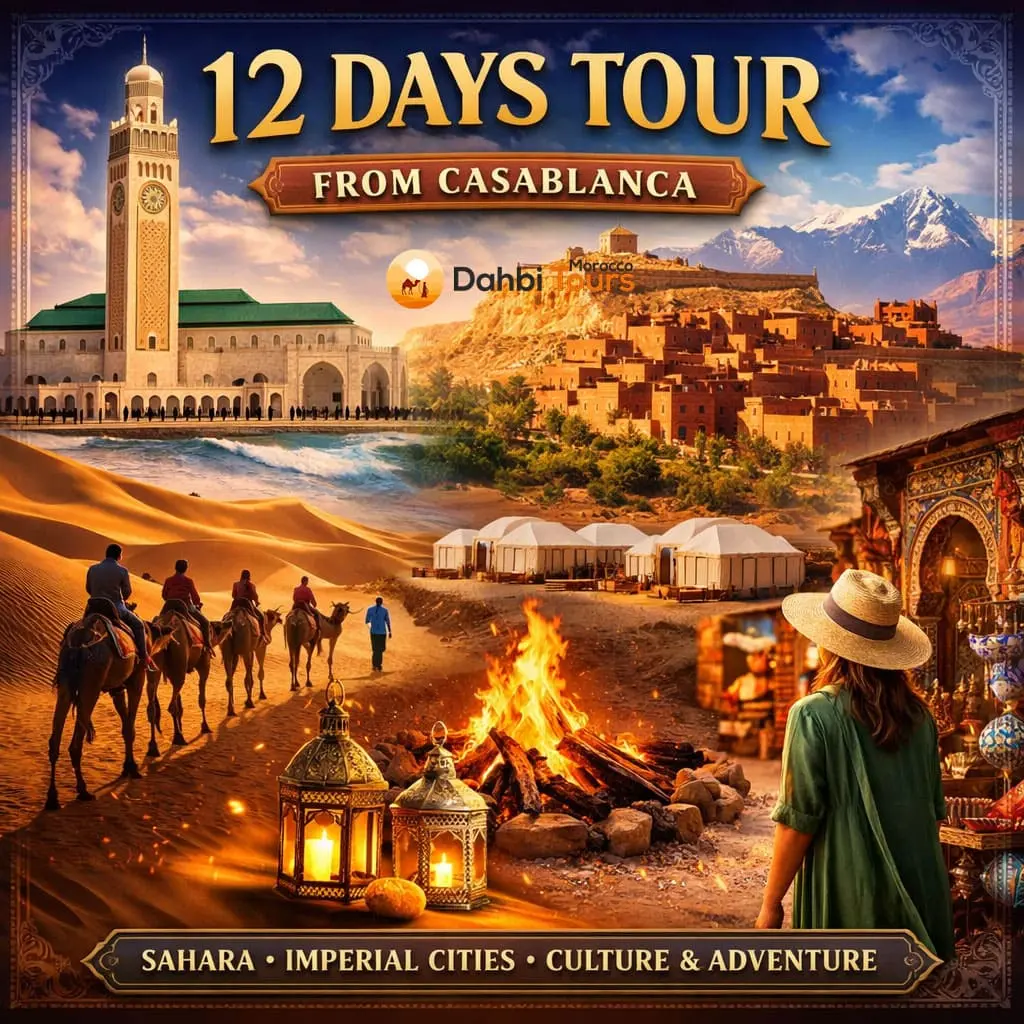
Take an unforgettable 12-day tour from Casablanca that is perfect for travelers who want to experience real Moroccan culture, comfort, and deep immersion. With Dahbi Morocco Tours, a licensed tour operator and trusted local expert, you’ll see Morocco in a whole new way, with guides who know all the best places to go, the best desert trails, and the most interesting cultural details.
This carefully planned trip includes imperial cities, the Atlas Mountains, old kasbahs, and the stunning Sahara Desert. This 12 Days in Morocco Tour Itinerary from Casablanca is perfect for people coming from the US, UK, or Europe who want to see new things, relax, and have fun.

4.9 out of 5 Based on 339 reviews.
Duration:
12 Days / 11 Nights
Departure:
Casablanca
Return:
Casablanca or Marrakech
Tour Type:
100% Private & Tailor-Made
Pickup:
Casablanca Airport or Hotel
The Destination
A 12 Days in Morocco Cultural Tour Unlike Any Other
This 12 days tour from Casablanca is the result of years of refining what Morocco genuinely offers the culturally curious traveler — not a checklist of attractions hurried through, but a carefully sequenced journey that allows each place to leave its mark before the road moves on.
Dahbi Morocco Tours is a fully licensed, Marrakech-based tour operator with deep roots in the communities this itinerary passes through. When you travel with us, you are not purchasing a packaged tour sold by a third party. You are booking directly with the people who will guide you, arrange your accommodation, and ensure your experience is genuinely, rather than nominally, private.
The 12 days Morocco itinerary begins in Casablanca — Morocco’s commercial capital and Atlantic gateway — and winds eastward through the imperial cities of Rabat and Fes before turning south through the Middle Atlas, across the Valley of a Thousand Kasbahs, and deep into the Sahara. It then crosses the High Atlas via the Tizi n’Tichka pass to arrive in Marrakech, where it concludes before the return to Casablanca. Every landscape Morocco is famous for is represented. Every pace is measured to let each one breathe.
What Makes This 12-Day Morocco Itinerary Different from Any Shorter Tour
What makes this 12 days in Morocco tour itinerary from Casablanca exceptional is not the number of sites visited — it is the quality of access that Dahbi Morocco Tours provides to each one. Where other operators take groups through the tanneries of Fes in forty minutes, we give you two hours with a certified medina guide who grew up in the alleys you are walking. Where others photograph the Sahara from the road, we camp inside it.
International travelers from the USA, UK, and across Europe consistently describe this itinerary as the right length — long enough to arrive at the desert feeling rested, short enough to be manageable for those with limited annual leave. It is the most popular format in the Dahbi Morocco Tours portfolio for exactly this reason.
“Fourteen days in Morocco is not a holiday — it is a transformation. By the time you stand on the Erg Chebbi dunes watching the sun rise over the Sahara on Day 7, you understand that every day before it was preparation for exactly this moment.”
— Dahbi Morocco Tours, local guide perspective
The Gallery
Real Photos from Previous 14-Day Morocco Tours from Casablanca
Highlights in Video
Preview Your 14-Day Morocco Tour from Casablanca
The Journey, Day by Day
The Day-by-Day 14 Days Morocco Itinerary from Casablanca
This 14-day Morocco itinerary strikes a balance between comfort and immersion. It includes Morocco's most famous cities and landscapes, but it also leaves room for the spontaneous moments that will stay with you forever.
Casablanca: Where Morocco Begins
Your 14 days tour from Casablanca opens not with a rush to the road, but with a genuine encounter with Morocco's most modern city. After your driver meets you at Mohammed V International Airport or your city hotel, the afternoon unfolds at a measured pace along the Corniche, where the Atlantic breaks against pale limestone and the air carries salt and history in equal measure.
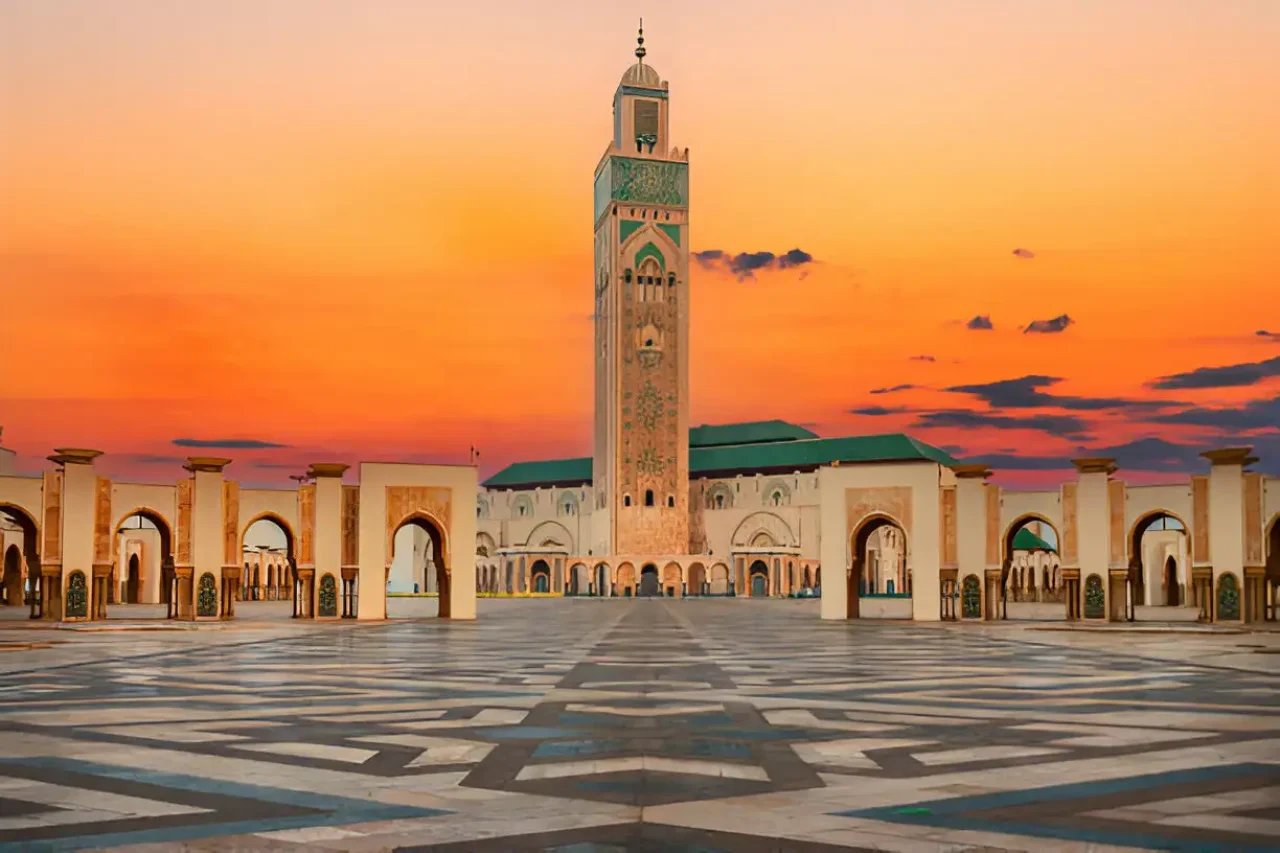
The evening belongs to the Hassan II Mosque — one of the few mosques in Morocco open to non-Muslim visitors — where the minaret catches the last hour of sunlight and the ocean churns beneath the glass floor of the prayer hall. It is a beginning that sets the tone for everything that follows: a country that gives you grandeur and intimacy at the same time.
Rabat: The Quiet Imperial Capital
An hour up the coast, Morocco's political capital rewards those who give it proper time. Rabat wears its imperial credentials with a restraint that Fes and Marrakech do not — the Kasbah of the Udayas perches above the Bou Regreg River like a painterly composition in blue and white, while the Hassan Tower stands in a field of broken columns that once promised to be the world's largest mosque.
Your guide leads you through the Andalusian Garden, past the Royal Palace gates, and into the medina's quieter lanes before the afternoon turns golden over the estuary. Dinner is taken at a riverside restaurant where the catches of the Atlantic arrive just hours before they reach the table.
Kasbah Udayas - Hassan Tower - Mohamed V Mausoleum - Rabat Medina
The Road to Fes, Meknes, and Volubilis
This is one of the most interesting days in a 14-day Morocco itinerary. Meknes, which was once the capital of Sultan Moulay Ismail, is Morocco's most underrated city. The Bab Mansour gate is probably the best example of Marinid architecture in the world, and the medina moves at a pace that lets you really look at things instead of just getting through them.
The Roman ruins of Volubilis are forty minutes away. They rise from the Saiss plain in a way that feels old and earned. Triumphal arches, mosaic floors, and olive presses are signs of a civilization that lived here two thousand years before the medinas were built. The road goes east through wheatfields to Fes by late afternoon. You'll spend the next two full days there.
Fes el-Bali: The Living Labyrinth
Fes el-Bali is the world's largest car-free urban area and the most disorienting, beautiful, and intellectually overwhelming place in Morocco. It's important to have a certified local guide here, not just a Dahbi team driver, but also a native fassi who knows a lot about the city's history. The 9,400 alleys in the medina are a maze that has grown naturally over hundreds of years. If you don't have a guide, you'll just get lost (but in a good way).
The morning is for the tanneries, the Chouara leather quarter, where hides have been dyed in the same stone vats since the 11th century, and the Al-Qarawiyyin mosque and university, which is the oldest university in the world that is still in use. The afternoon slows down: a ceramics cooperative, a lunch of pastilla bastilla in a restored Andalusian riad, and an hour just sitting in the Bou Inania Medersa while the tilework and carved stucco show what it looks like to be obsessed with craft on a large scale.
The Other Fes: Jewish Quarter and Blue Pottery
Most shorter tours don't allow for a second morning in Fes, but this slower pace is what makes a 2-week morocco itinerary from Casablanca worth every extra day. The Mellah, which is the old Jewish neighborhood, tells a story about Morocco's past that most tourists don't know about: a community that shaped the spice trade, the art of silversmithing, and the political life of the Moroccan sultanate for five centuries.
In the afternoon, you go to the potteries on the hills above the city, where families have been making blue-glazed pottery in traditional wood-burning kilns for generations. The drive south to the Middle Atlas town of Ifrane has an unexpected bonus: a cedar forest, Barbary macaques, and a European-style mountain town that seems impossible in North Africa.
Crossing the Atlas: The Road to the Desert Begins
Today is one of the best days to drive on a 14-day tour of Morocco. The route goes down from the cedar-covered Middle Atlas through Midelt, which is Morocco's apple capital. Along the way, vendors line the road with crates of mountain fruit. Then it drops steeply into the Ziz Valley, which is a corridor of 200,000 palm trees that get their water from snowmelt from the High Atlas.
As you go south, the light changes. The air gets thinner and then warmer. The colors change from green to ochre to rust, and the quiet outside the windows becomes something that feels almost like a ceremony. At night, the edge of the Sahara is only thirty minutes away. You spend the night in Erfoud, the town that serves as the gateway to the Erg Chebbi dunes. You stay in a traditional kasbah hotel where the stars start to show up against a sky with no other light source for 100 kilometers in any direction.
The Sahara: Camel Trek, Dunes, and a Night Under Stars
The sunrise is the day that makes the trip worth it. The Erg Chebbi dunes rise from the flat desert floor to 150 meters of sculpted, wind-carved orange sand. This image has been on the front page of every Morocco travel magazine for fifty years, and it is still more stunning in person than any photo can show. The light hits the dunes in such a way that each ridge looks like a golden brushstroke, which is when your camel trek starts in the late afternoon.
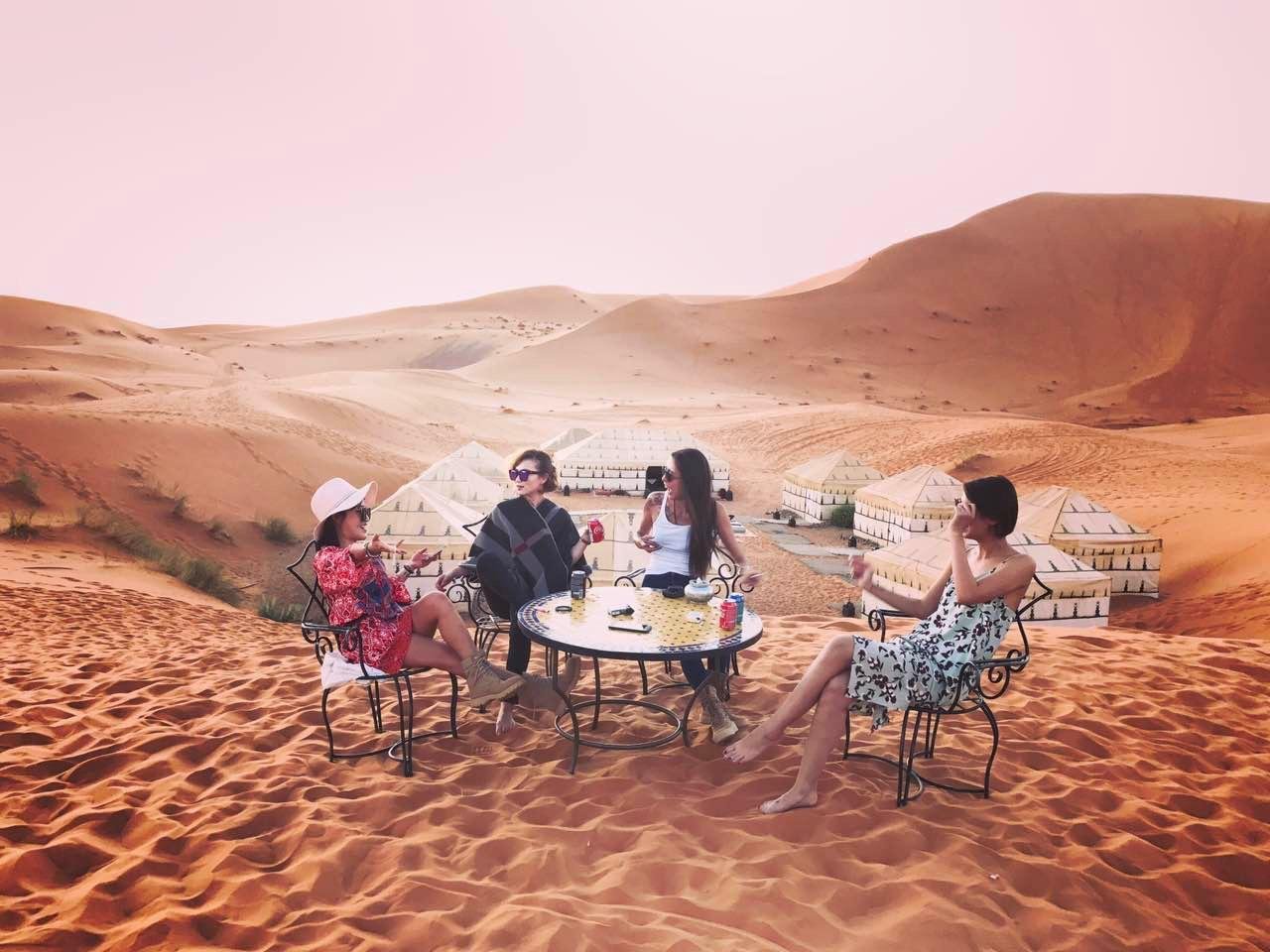
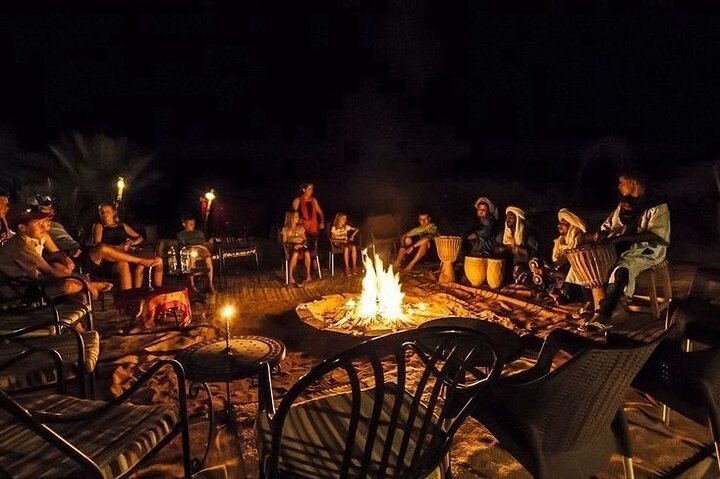
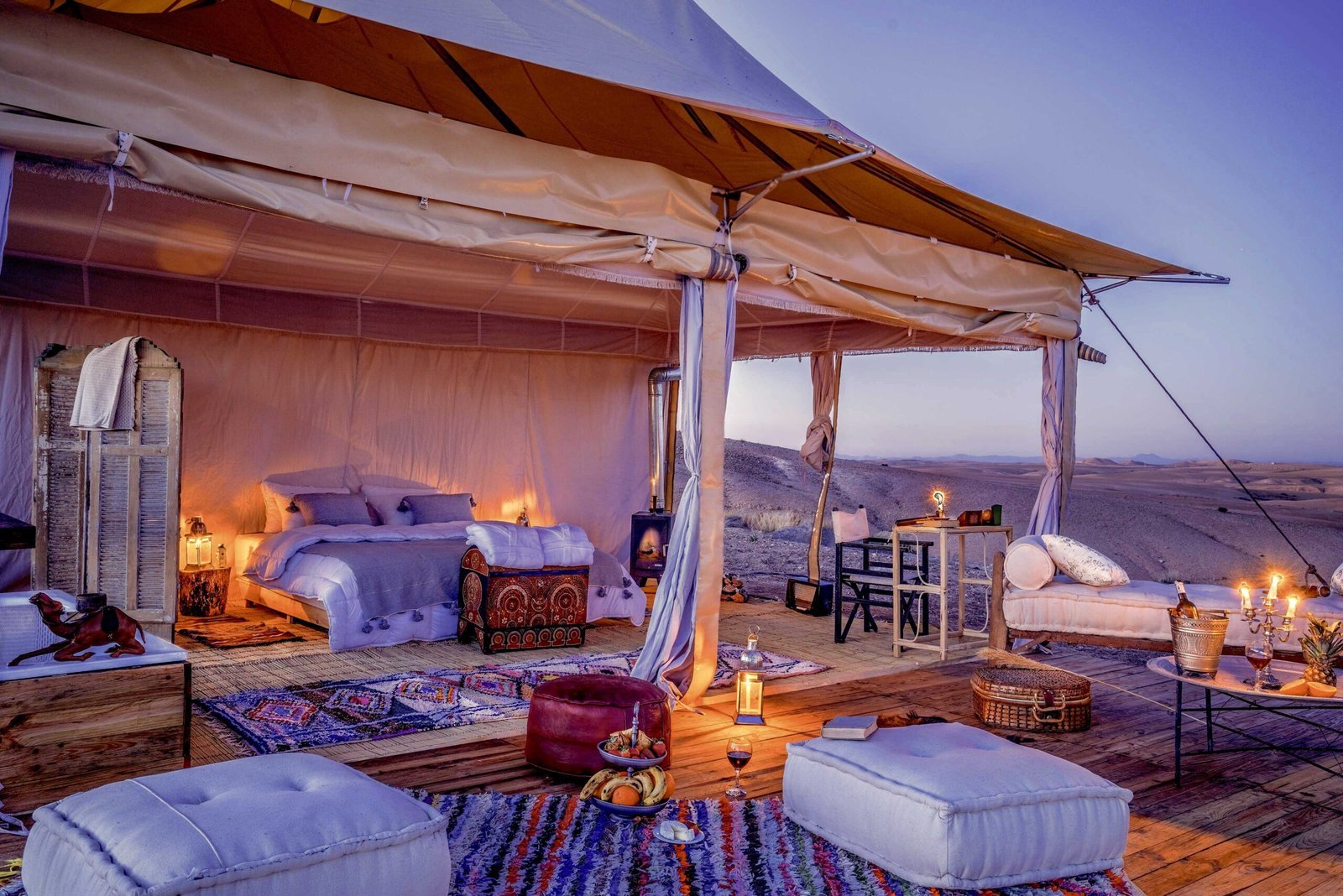
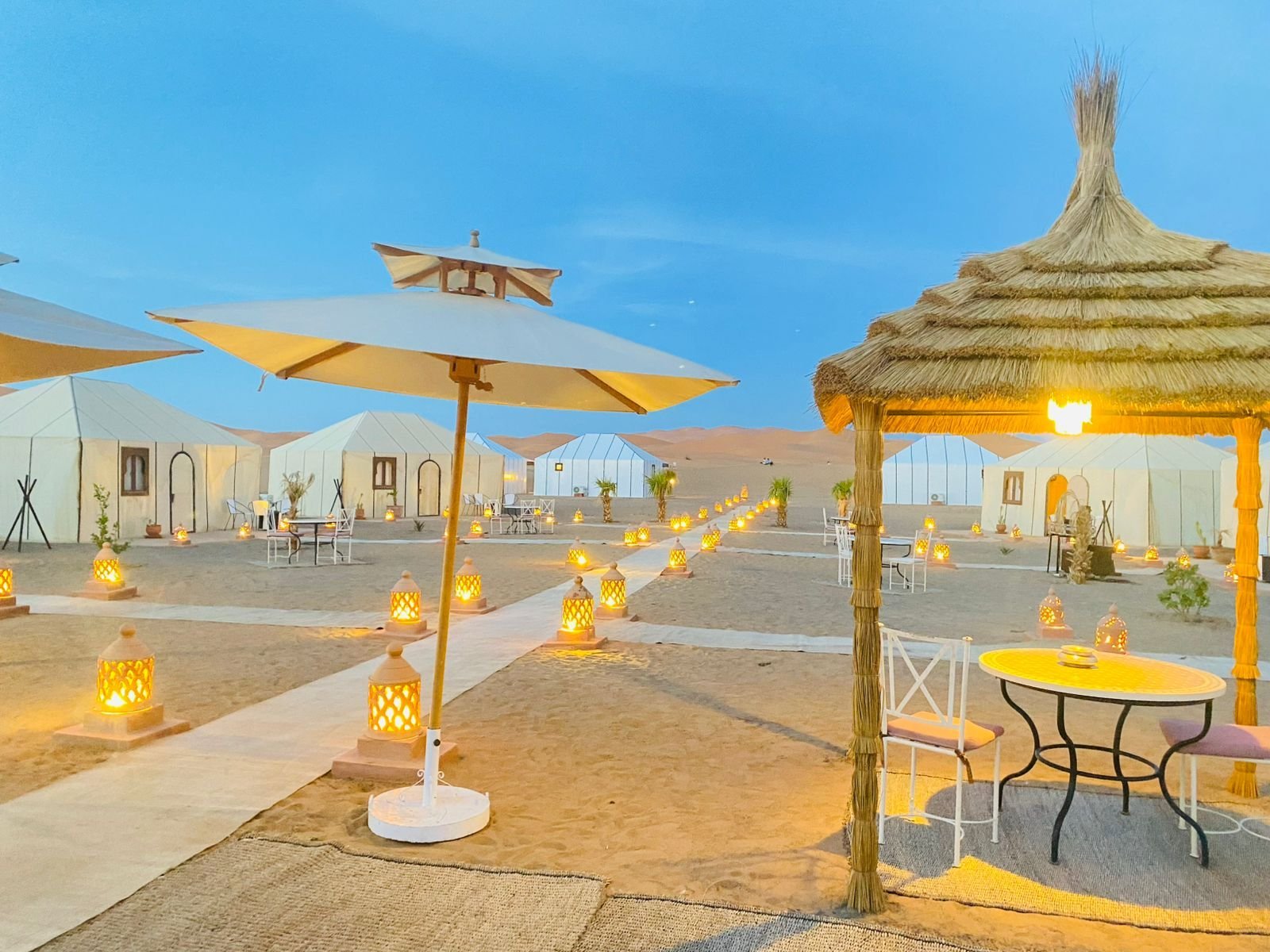
Arriving on camelback at the luxury desert camp as the sun sets behind the western dunes is a moment that has made grown men and women speechless. A traditional Berber dinner under a sky full of stars comes before a night in a furnished private tent with real beds and all the comforts you need. You have to wake up before dawn to see the sunrise over the dunes. It's the best fifteen minutes of any 14 days in Morocco, and you won't regret leaving your sleeping bag behind.
The Road of Kasbahs: Gorges, Valleys, and Ancient Fortresses
The way west into the Valley of a Thousand Kasbahs from the dunes in the morning light is a landscape that is unlike any other in Africa. There are ksour, or mud-brick fortresses, on the horizon every few kilometers. Each one is a self-contained world of family compounds, grain stores, and communal ovens that have grown naturally over the years.
The Todra Gorge divides the land in half. On one side, there are 300-meter-high walls of rose-colored limestone that surround a crystal-clear river that is only 10 meters wide. The thermal effect makes it a cool corridor of pure drama. We eat lunch at a family-run restaurant by the river where the owner's wife makes the bread. The afternoon light falls into the Dades Valley, where pinkish-orange rock formations bend into shapes that look like they were planned, built, or designed but are actually just the work of wind and time.
Skoura Oasis, Kasbah Amridil, and the Door of the Desert
The Skoura Palmery is a green paradise that stretches across the valley floor. It looks like a miracle after the hammada stone desert of the day before. The Kasbah Amridil rises from its center. It is a fortified manor from the 17th century that was on the old 50-dirham banknote and is still one of the most photogenic buildings in southern Morocco. It has been home to the same family for eleven generations.
Ouarzazate, which is known as the "Hollywood of Africa," has been the site of many major films, including Gladiator, Game of Thrones, and Lawrence of Arabia. The Atlas Film Studios tour is optional, but it's always a hit. It gives you a great look at how Morocco's landscapes can stand in for ancient Rome, Westeros, and everything in between. The town itself is quiet, helpful, and not well-known as a good place to relax before
Aït Benhaddou and the High Atlas Pass
Aït Benhaddou is a UNESCO World Heritage ksar—the most complete example of southern Moroccan earthen architecture on earth—and the morning spent within its ramparts is a genuine encounter with a living history that the UNESCO designation tends to flatten. A handful of families still reside inside, and the women who sell argan-oil soap in the lower courtyards do so with the casual dignity of people who have watched ten thousand tourists pass and remained entirely unbothered.
The Tizi n'Tichka pass at 2,260 meters is the highest road pass in Morocco and one of the most dramatic drives in North Africa. The High Atlas folds around you in layers of purple, grey, and snow-streaked white before the road descends through Berber villages, argan-tree-dotted hillsides, and rose-cultivated valleys toward the ochre sprawl of Marrakech — a city you will explore for the next two days.
Marrakech: The Red City, Unfiltered
Marrakech is where most Morocco tours begin and end. Because yours began in Casablanca and has already taken in four imperial cities, two mountain ranges, and the Sahara, you arrive here with context—and that makes all the difference. The Djemaa el-Fna square is still one of the most kinetic public spaces on earth, but you understand now how it fits into a country-wide tapestry rather than standing as a single, bewildering spectacle.
The morning covers the Bahia Palace, the Saadian Tombs, and the Ben Youssef Medersa — arguably the finest example of Moroccan decorative arts in a single room. The afternoon is unstructured: the souks of the medina, organized by craft guild as they have been for centuries, reward as many hours as you give them. The hammam is strongly encouraged before dinner at a rooftop restaurant above the square, where the city sounds rise like a tide beneath a copper-coloured sky.
Essaouira: Wind, Ocean, and Blue Boats
Three hours west of Marrakech, the Atlantic reappears. Essaouira — the ancient port city of Mogador — is a place of extraordinary sensory balance: whitewashed ramparts and blue fishing boats, argan oil and cedar carvings, gnawa music and Portuguese cannon. The medina is UNESCO-listed and one of the most walkable in Morocco, its straight grid layout a Portuguese colonial inheritance that makes it almost the geographic opposite of Fes.
The ocean wind that gives the city its name (Essaouira means "the well-designed") makes it one of the world's premier kite-surfing destinations and keeps the afternoon temperature several degrees cooler than anywhere inland. The fish grills on the port square serve the morning's catch, and the gnawa musicians in the square play a music rooted in sub-Saharan spirituality that sounds unlike anything else in Morocco. An overnight in a riad within the medina walls is among the finest experiences this 14 day morocco tour offers.
The Atlantic Road North: Safi Pottery and El Jadida Cistern
The coastal return northward is not a transit day — it is a curated final chapter. Safi is Morocco's great pottery city, where craftspeople produce the distinctive blue-and-green glazed ceramics that end up in riads and design stores across Europe. The working pottery district sits above the ocean cliff, and watching a single piece move from raw clay to finished glaze over the course of a morning workshop is a meditation on patience and mastery.
The Portuguese Cistern in El Jadida is one of Morocco's most quietly impressive places. It is an underground Gothic vaulted room that is flooded with a few centimeters of still water that perfectly reflects the ribbed stone ceiling. It was the setting for Orson Welles's Othello. It should have a lot more visitors than it does. The road goes back to Casablanca by night, and the city that started this journey shows itself one last time, now familiar, now clear, and now really a part of you.
The final morning of your 14 days in morocco belongs to you. Depending on your flight time, a last breakfast beside the Atlantic, a walk along the Corniche, or a quiet coffee in the ville nouvelle before the airport transfer, your Dahbi Morocco Tours driver will work around your departure schedule to make the most of whatever time remains.
Departure transfers to Mohammed V International Airport are included. For those extending their journey, optional drop-off in Rabat, Marrakech, or any other Moroccan city can be arranged. The itinerary ends, but Morocco does not. Most of our guests are already thinking about their return before they reach the gate.
The Experience
What to See & Experience on This 14-Day Tour
Hassan II Mosque, Casablanca
One of the biggest mosques in the world, built partly over the Atlantic Ocean. Visitors who are not Muslim can go on guided tours. The carved plaster, painted cedar, Italian marble, and Moroccan zellige in the interior are the best examples of modern Islamic architecture, and most visitors are completely surprised by how beautiful they are.
Fes el-Bali Medina & Chouara Tanneries
A UNESCO World Heritage site with 9,000 narrow streets that haven't changed since the 11th century. The Chouara Tanneries are one of the most amazing industrial heritage sites in the world. They have been dyeing leather in stone vats for a thousand years. The Al Quaraouiyine University, which opened in 859 AD, is more than 200 years older than Oxford.
Middle Atlas Mountains & Ziz Valley
The road from Fes to Merzouga goes through cedar forests full of wild Barbary macaques, over high plains with Berber towns, and into the amazing Ziz River Valley, which is a palm-lined strip of old villages and earthen fortresses that cuts through the pre-Saharan plateau. This is the beautiful, forgotten part of Morocco.
Explore Five Imperial Cities
Casablanca, Rabat, Meknes, Fes, and Marrakech — the full imperial quintet, each with a completely distinct character, architecture, and cultural rhythm. No other Morocco itinerary 14 days covers them all.
Discover Roman Volubilis
Triumphal arches, mosaic floors, and olive presses rising from the Saiss plain — North Africa's most accessible and evocative Roman site, and one of the great unsung monuments of the ancient world.
Sahara Desert & Erg Chebbi Dunes, Merzouga
The Erg Chebbi dune field near Merzouga is the most dramatic Saharan landscape in Morocco. The dunes rise 150 meters, and the sea of golden sand meets complete silence. A camel trek into the dunes at sunset, followed by a night in a luxury desert camp under stars that are too dense to see, is the best thing to do in Morocco.
Ait Benhaddou Kasbah & the Road of Kasbahs
Ait Benhaddou is a fortified earthen city that is on the UNESCO list. It has been in more movies than almost any other place on Earth, including Gladiator, The Mummy, and Game of Thrones. The Road of a Thousand Kasbahs runs between Merzouga and Ouarzazate and goes by dozens of old mud-brick forts that are in different stages of ruin and restoration. Each one is more beautiful than the last.
Tizi n’Tichka Pass & Marrakech
The last day goes over Morocco's highest road pass, which is 2,260 meters high. From every direction, you can see the High Atlas mountains. The trip ends perfectly with a descent into the warmth and noise of Marrakech. The ancient medina, Djemaa el-Fna square, and the Koutoubia Mosque minaret rise above the roofline.
Visit Essaouira Atlantic Coast
UNESCO-listed medina, Portuguese ramparts, blue fishing boats, world-class seafood, and gnawa music — Morocco's most beguiling coastal city, rarely given enough time by shorter tours.
Transparency
What's Included in the 14 Days Tour from Casablanca
We believe transparent pricing is the foundation of trust. Here is a complete, honest breakdown.
What's Included:
- Private air-conditioned vehicle throughout all 14 days (4x4 or minivan)
- Certified English-speaking driver-guide (ISIT-qualified)
- Local expert medina guides in Fes and Marrakech
- 12 nights accommodation: riads, kasbahs, and kasbah hotels
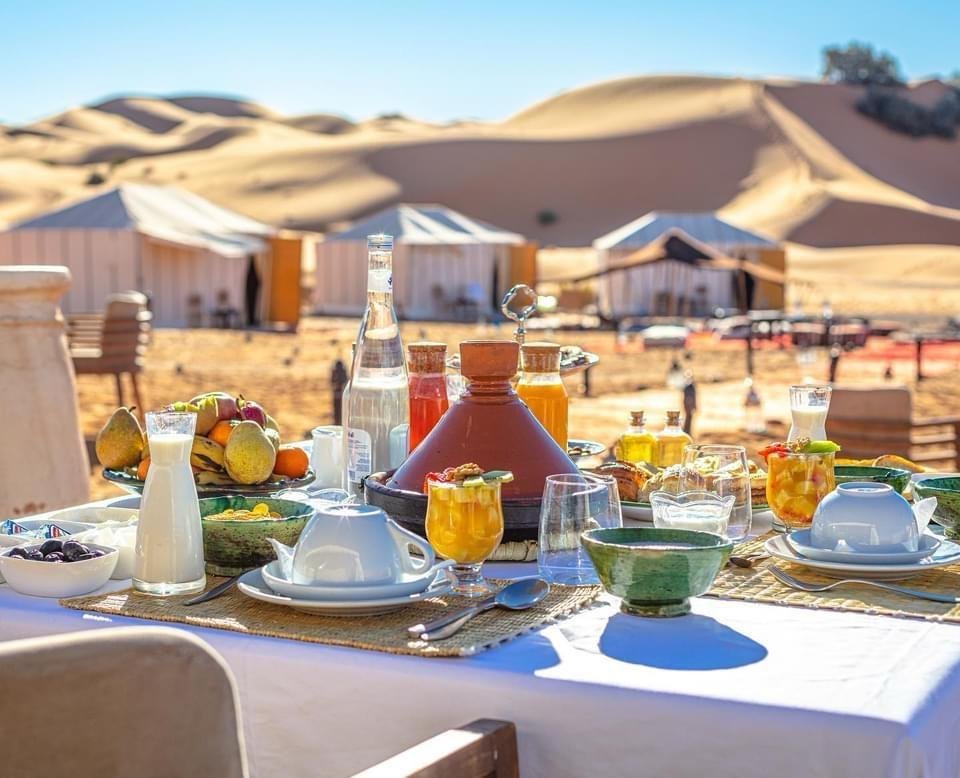
- 1 night luxury Sahara desert camp at Erg Chebbi (dinner & breakfast included)
- Daily breakfast at every property
- Camel trek to the desert camp at sunset
- Entrance fees: Volubilis, Bahia Palace, Saadian Tombs & all included sites
- All road tolls, motorway fees, and fuel throughout
- Bottled water throughout each driving day
- Airport pickup in Casablanca & drop-off on departure day
- 24/7 on-trip support from Dahbi Morocco Tours
Not Included (and Why):
- International flights to/from Morocco
- Travel insurance (strongly recommended — purchase before arrival)
- Lunches and dinners (except desert camp dinner & breakfast)
- Entry visa (visa-free for most nationalities — check before booking)
- Personal shopping at cooperatives or artisan stalls
- Gratuities for your guide and driver (discretionary, always appreciated)
- Alcoholic beverages at any property
- Optional upgrades: hammam, hot air balloon, quad biking, cooking class
Optional Add-Ons: Hammam experience in Fes or Marrakech · ATV quad biking at Erg Chebbi · Cooking class in Marrakech · Extended Sahara night (add 1 day) · Chefchaouen detour (add 1 day) · Custom photography itinerary
Our Promise
Why Choose Dahbi Morocco Tours for Your 14-Day Itinerary

Local Expertise, Not Tourist Scripts
All of our guides on the Casablanca-to-Marrakech route are Moroccans who grew up between the two cities. The Institut Supérieur International du Tourisme (ISIT) in Tangier, Morocco, gives our lead guides the highest level of guide certification. When our guide takes you to meet the miller in the Fes medina or the camel handler at Erg Chebbi, it's a real introduction between people who know each other, not just a stop on a loop.

Transparent Pricing & No Hidden Charges
Our standard 14-day tour from Casablanca includes a private, air-conditioned car, a certified English-speaking guide the whole time, 13 nights in real riads and a luxury desert camp, breakfast every day, a camel trek at Erg Chebbi, entry to Ait Benhaddou, and all road tolls and fuel. We inform you in advance about the exclusions. There is nothing new that day.

Responsible Tourism Across Morocco
Dahbi Morocco Tours only works with family-owned riads and restaurants that buy from local farmers. We tell every group of guests how to be respectful when they visit desert communities and natural sites. We give a part of every booking to community groups in the areas we travel through. For us, "traveling responsibly in Morocco" isn't just a marketing slogan; it's how we've done business for more than ten years.
Essential Tips
Essential Tips Before You Book This 14-Day Tour
What is the best time of year for a 14-day Morocco tour from Casablanca?
The best times are from March to May and from September to November. The weather is nice all over the country. It's mild in Casablanca and Fes, the mountain passes are clear, and the desert is warm but not too hot. Summer (June to August) is a popular time to visit, but it gets very hot in the southern desert and Marrakech. Winter trips are possible and often very beautiful, but the Tizi n'Tichka pass can close in January and February because of snow. Your driver will know and will find a new route if necessary.
How much should I budget beyond the 14-day tour price?
Beyond the tour cost, plan for: Hassan II Mosque interior entry (~120 MAD / ~$12 USD per person), personal lunches and dinners (~150–300 MAD per meal at good local restaurants), gratuities for your guide (150–200 MAD per day) and driver (80–100 MAD per day), personal shopping, and travel insurance. Moroccan dirhams are the only currency accepted everywhere — ATMs are available in all major cities, and your guide can advise on the best places to exchange or withdraw cash.
Is this 14-day itinerary suitable for first-time visitors to Morocco?
This route was made with people who have never been there before in mind. With a private guide, you'll always have help with language, culture, and context. You won't have to figure out how to get around an unfamiliar city by yourself, deal with transportation issues, or try to figure out what you're looking at without help. For people who go to Morocco more than once, the route also has depth, especially the Fes medina experience, which is worth going to more than once.
What should I pack for 14 days covering these regions?
Five days in Morocco means going through different climates. Pack: light, breathable clothes for Casablanca and Marrakech; a warm layer for Fes (especially in the spring and fall evenings) and the drive through the Atlas Mountains; a light waterproof or windbreaker for the Tizi n'Tichka pass; modest clothes for visits to the medina (women should wear clothes that cover their shoulders and go below their knees); closed-toe shoes with grip for the Fes medina cobblestones; and a headscarf (optional but appreciated when entering mosque areas). At night in the desert, the temperature drops quickly after the sun goes down. Even in the summer, you need a warm jacket or fleece.
Can this 14-day Morocco itinerary be customized for my group?
You can change any part of the Dahbi Morocco Tours tour before you book it. Some common changes are adding a day in Chefchaouen, the famous "Blue City," between Fes and the desert; extending the stay in the Sahara to two nights; upgrading the accommodations to 4-star or 5-star riads throughout; adding a cooking class in Marrakech; or changing the start and end points. Let us know how many people are in your group, when you want to go, and what you want, and we'll send you a detailed proposal within 24 hours.
Tour Price
Price — 14-Day Morocco Itinerary from Casablanca
Planning your 14 days tour from Casablanca is not just about the route — it is about choosing the right experience that matches your comfort level, travel style, and expectations. At Dahbi Morocco Tours, we offer flexible pricing tailored to your group size, accommodation preferences, and any custom additions to the standard itinerary.
How Much Does a 14-Day Tour from Casablanca Cost?
The price of your 14-day Morocco itinerary from Casablanca depends on several factors such as group size, accommodation type, and level of service.
Average price per person:
- Shared group tour: from €880 – €950
- Private standard tour: from €1350 – €1500
- Private luxury tour: from €1900 – €2,400+
Starting From
€890
per person · based on 2 travelers sharing · private tour
✓ 14 Days / 13 Nights — 100% Private Tour
✓ Casablanca departure · Casablanca or Marrakech return
✓ 12 nights riad, kasbah & hotel accommodation
✓ 1 night luxury Sahara desert camp (dinner & breakfast)
✓ Camel trek, Ait Benhaddou, Fes medina guide included
Contact Dahbi Morocco Tours today to confirm availability and receive your custom quote based on group size and travel dates.
Getting There
Getting to Casablanca & Starting Your 14-Day Morocco Tour
✈️ Flying into Casablanca — RECOMMENDED START POINT
Casablanca Mohammed V International Airport (CMN) is Morocco’s primary international hub, with direct flights from New York (JFK), London (Heathrow), Paris (CDG), Madrid, Amsterdam, and dozens of other cities. Most international travelers to Morocco land here. This 14-day itinerary starts at the airport itself — your Dahbi Morocco Tours driver and guide meet you at arrivals on Day 1. No additional transfers, no wasted travel time. The tour begins the moment you land.
🚗 Private Tour vs. Independent Travel
Independent travelers can cover this route by combining CTM buses between cities, local taxis for day excursions, and booking accommodation separately. This is technically possible across 14 days, but it adds significant logistical complexity to a route that covers ten distinct regions. A private guided tour with Dahbi Morocco Tours eliminates every logistical decision — the route, the timings, the accommodation check-ins, the restaurant selections, the desert camp coordination, and the border between experience and administration. You travel; we handle everything else.
👥 Private Tour vs. Group Tour
Private tours — as Dahbi Morocco Tours exclusively offers — mean your own vehicle, your own guide, your own schedule, and 14 days shaped entirely around your group’s pace and interests. Every stop can be extended, every detour explored, every question answered without time pressure. This is the defining advantage of a private 14-day morocco tour over any shared group alternative: the itinerary serves you, not the other way around.
Reserve Your Experience
Reserve Your 14-Day Morocco Tour from Casablanca
Time Well Spent
Why This 14 Days Morocco Itinerary Beats Any Shorter Tour
Morocco is vast, layered, and irreducibly complex. A country that took five dynasties a thousand years to build cannot be properly understood in four days. Here is why two weeks is the right investment.
Shorter Morocco Tours (4–8 Days)
- Rush through medinas without absorbing them
- Drive past landscapes that deserve to be walked
- Skip imperial cities or combine them too quickly
- Reach the Sahara exhausted from the drive
- Sacrifice either the coast or the desert—never both
- Miss the quieter, deeper moments between the highlights
- Leave Morocco feeling you saw the surface only
The 14 Days Morocco Itinerary Difference
- Two full days in Fes — enough to truly inhabit the medina
- All five imperial cities covered in proper sequence
- Arrive at the Sahara rested and ready to receive it fully
- Atlantic coast AND Sahara desert — no compromise
- Time for unplanned discoveries and genuine spontaneity
- Volubilis, Essaouira, Todra Gorge — sites shorter tours always cut
- Leave Morocco with a complete picture and a desire to return
The difference between a week in Morocco and two weeks is not the number of places you visit. It is the quality of attention you give to each one.
Dahbi Morocco Tours — from our booking consultations
Questions
Frequently Asked Questions About the 14-Day Morocco Itinerary from Casablanca
Everything you need to know before confirming your 14 day morocco tour with Dahbi Morocco Tours.
Yes — and in many ways it is the ideal first Morocco experience. The 14-day format removes the pressure and rush that makes shorter tours disorienting for first-timers. You have enough time to acclimatize to medina navigation, food, culture, and pace before the more remote parts of the journey. Dahbi Morocco Tours guides are specifically briefed to contextualise Morocco's history, religion, and social customs throughout the trip, so you arrive at each new destination with the knowledge to appreciate it properly. We also handle all logistics — accommodation, transfers, entry tickets, and guide coordination — so you can focus entirely on the experience.
Dahbi Morocco Tours accommodates groups from one solo traveler to sixteen people. For groups of 1–3 people, we use a comfortable sedan or small 4x4. Groups of 4–8 travel in a spacious 4x4 SUV or minivan. Larger groups travel in a dedicated minibus with a dedicated guide. All vehicles are modern, air-conditioned, and appropriate for both city and desert terrain. If your group exceeds sixteen, contact us — we can operate multiple private vehicles in convoy and negotiate group accommodation rates accordingly.
Completely. The itinerary published here is our recommended standard route, but every booking begins with a consultation. Travelers interested in photography receive a different internal schedule (dawn starts, golden-hour positioning, hidden viewpoints). Families with young children get adjusted pacing and activities. Food-focused travelers can include market visits, cooking classes, and restaurant reservations in advance. Those interested in architecture, Islamic history, Jewish heritage, Roman archaeology, or Berber culture can request that these threads be woven more prominently through the route. We are not a tour operator that runs the same script for every group — we build each trip around the people taking it.
We use a curated selection of riads, kasbah hotels, and maison d'hôtes throughout the itinerary—selecting properties that add to the experience rather than simply providing a bed. In Fes and Marrakech, we use riads within or immediately adjacent to the medina. In the Dades and Draa valleys, traditional kasbah hotels. In Essaouira, a restored riad inside the medina walls. At Erg Chebbi, a private luxury desert camp with proper beds, linen, and en suite facilities. All standard properties are 3-star equivalent in comfort. Luxury upgrades to 4- and 5-star riads are available throughout. Let us know your preferences and budget at booking, and we will curate accordingly.
Morocco is one of the safest countries in Africa for international travel and has been consistently rated among the safest destinations for solo and female travelers in the Muslim world. The main challenge solo travelers — particularly women — face in Morocco is unwanted attention and unsolicited guide offers in busy medinas, which our guides manage directly and professionally. Dahbi Morocco Tours clients travel with a licensed local guide in all major medinas, which effectively eliminates the hassle that independent travelers sometimes encounter. We have hosted hundreds of solo female travelers and regularly receive feedback that the guided format transformed their experience from anxious to joyful.
March through May and September through November are the ideal windows. Spring brings wildflowers to the Atlas foothills, comfortable walking temperatures in every city, and the Sahara warm enough for evenings outside the tent without being extreme. Autumn offers similar conditions, with the added bonus of date harvest season in the Draa and Ziz valleys. Winter (December to February) is excellent if you accept the trade-off: the desert nights are genuinely cold (0–5°C), but the dunes are near-empty and the low sunlight creates extraordinary photography conditions. Summer is manageable with proper preparation — the Atlantic coast cities like Essaouira are cool year-round — but the desert interior (Merzouga) reaches 45°C in July and August and requires additional planning.
Contact us by email at dahbimoroccotours@gmail.com or via WhatsApp using the number displayed on this page. Provide your preferred travel dates, group size, accommodation in Casablanca or flight details, and any specific requirements or customisation requests. We will respond within a few hours with availability confirmation and a detailed personalised quote. A deposit of 20–30% secures your booking; the balance is due closer to travel. We accept international bank transfers and major payment platforms. We recommend booking at least 4–6 weeks in advance for peak season travel (spring and autumn), though we regularly accommodate bookings made with shorter notice subject to accommodation availability.
Yes — the camel trek to the luxury desert camp and the overnight stay (including dinner and breakfast) are fully included in the standard tour price. The camel trek is the one-way ride into the camp at sunset, lasting approximately 1 to 1.5 hours across the dunes. The return from camp the following morning is by 4x4 vehicle, allowing time for the sunrise dune walk before departure. The desert camp provides private furnished tents with proper beds, linen, electricity, and en-suite toilet facilities. This is not a basic Bedouin bivouac — it is a comfortable, atmospheric camp that combines genuine desert immersion with the practical comfort that multi-week travelers appreciate after ten days on the road.
About us
DAHBI MOROCCO TORS is a local travel company specializing in private, custom tours across Morocco. We offer authentic experiences, professional local guides, and reliable service trusted by international travelers.
Contact us
Real customer reviews
What Our Clients Say About the 14-Day Morocco Tour

 146+ verified reviews
★★★★★
One of the best experiences
“We began our trip in Casablanca and ended in Marrakech. Our guide was so amazing — incredibly kind and very accommodating. We learned a lot about Moroccan life, history, and culture. As a travel professional, I was a little anxious about having someone else take care of the trip details, but everything was fantastic. The night in the desert was absolutely amazing. I highly recommend Dahbi — he will provide you with an unforgettable, uniquely Moroccan experience.”
— Sheena R, United States
★★★★★
Awesome tour to see Morocco
“My wife and I just returned from our 10-day trip to Morocco. Dahbi Tours was excellent every step of the way. Every person you come into contact with at this company is extremely professional. The accommodations were superb — you will feel like royalty on a trip through this local company. I highly recommend them.
— David, Australia
★★★★★
Fantastic experience — 2 female solo travelers
“As 2 female travelers, our priorities were to feel safe while still being adventurous. We felt very comfortable throughout — Casablanca, Marrakech, the Atlas Mountains, and Fes. Our tour guide went above and beyond, we felt catered to and very well taken care of. He was professional, knowledgeable, and friendly. I highly recommend using this tour company for your trip to Morocco.”
— Kelly W, United Kingdom
★★★★★
Amazing experience
“We booked a full tour which included an unforgettable night in the Sahara, traveling through the Atlas Mountains, and saw so many secret and hidden places because of the knowledge and experience of our guides. We had so much fun with them and even now stay in touch. We will definitely book another trip once we’re back in Morocco.”
— Timo B, Germany
EXCELLENTVerified One of the best experiences Just leaving Morocco after an absolutely spectacular experience with Dahbi. We began our trip in Casablanca and ended in Marrakech. He was so amazing and one of the most memorable parts of the trip! He was incredibly kind and very accommodating. It’s not easy to travel with a toddler and he always kept her happy by finding a cat and always keeping her entertained. She loves cats. We learned a lot about Moroccan life, history, and culture from him. As a travel professional, I was a little anxious about having someone else take care of the trip details, but everything was fantastic. I never allow anyone to take care of my travel arrangements since I am very picky and but I was pleased with the quality of service. Our driver drove us in very comfortable Mercedes minivan. I especially enjoyed our Raid in Dades and the tent in the desert. They were absolutely amazing, as was the food served there. At the desert campsite, we were treated to drumming by local musicians. We were surprised to see Dahbi drumming along with them! It turns out that he’s a man of many talents. The campsite was beautiful. It was a great experience. Dahbi was so knowledgeable and engaging. He also took me to a spa where I had the most amazing Hammam experience and massage. I felt so relaxed and very clean afterwards. Dhabi also took fantastic pictures and videos of my family and I. I highly recommend Dahbi He will provide you with an unforgettable, uniquely Moroccan experience. I miss them and Morocco already.Posted onVerified Amazing memories with the best people! We just come back to Marrakech from our three days tour to Merzouga. I’m been working for a few months with Houssain, he’s amazing! Very responsive, professional and absolutely honest. Although every detail was planned with him, our tour driver and guide was Mohamed. We couldn’t have a more perfect, pleasant and enjoyable trip! Mohamed was a phenomenal driver, we felt safe all the time. He was funny, respectful, professional, knowledgeable. Every detail of the trip was carefully prepared by Houssain, the Sahara camp, ATV ride, camels ride, local food, entertainment, etc. everything was flawless!! I have to be honest planning everything through WhatsApp messages, could be a little risky at times. But you can tell by the reviews, that Houssain and Mohamed represent this company very well! Good job guys! My family and I are thankful to visiting your beautiful Country and have such a wonderful memories with you! Thank you very much!Posted onVerified Increíble experiencia!! Dahbi Morocco tours desde el inicio a nuestra llegada a marrakech con nuestro guía Houssain quién en todo momento nos brindó seguridad en cada visita a los hermosos museos en el primer día. Visita a playa Essaouira una experiencia maravillosa con sus aguas cálidas. Visita y cena en el desierto con un paisaje increíble!! Recomiendo 100% la agencia y al nuestro Guía!!!Posted onVerified Excelente experiencia Muy buena experiencia, recomendable 100% nos hizo un tour en Marrakech, en el desierto, en la playa, por los mercados y los mejores lugares turísticos. Somos 5 amigas que nos sentimos muy seguras y comodas con Dahbi Morocco Tours, también sus conductores fueron muy amables y cordiales con todas nosotras.Posted onVerified Best Tour Company Hi Everyone! I had an amazing experiance with Dahbi Tour company. Throughout the entire trip, they took care of us . They picked my friend and I up from the airport in a reliable car and drove us to Marrekesh . The drivers driving skills were professional as well. All the activities we participated were fun, safe and educational. Our tour guide and driver were extremely professional throughout the trip and had a great personality. We had the chance to see the via hike the Atlas mountains and have lunch at a local Berber house and the food was amazing. Not only that, we went to the Blue City , Marrakesh, and Fes . We were 100 percent of the time in safe hands. I would recommend this tour company to anyone who is going to Morocco. Best of luck to this family owned company! When I go back to visit again, I will use you again:)Posted onVerified Highly Recommend I booked this Tour with Dahbi and Zakaria. I have to say the tour itself was incredible and I have no complaints. They picked us up in a Mercedes Benz Van, drive us to all the important spots, help us bargain for goods, and make sure we were completely taken care of. They were very kind, accommodating and informative. On the first day I lost my glasses at one of the sights, after we arrived at the hotel, Dahbi and Zakaria took me to a optician where they helped me bargain for glasses and purchase a pair. This act of kindness from them saved my trip. Also the camel riding was a once in a lifetime experience and one you can’t miss out on.Posted onVerified Fantastic experience I just finished my week vacation in Morocco and this tour company was amazing every step of the way- from the planning stages (very responsive) to the drop off at the airport. As 2 female travelers, my friend and my priorities were to feel safe while still being adventurous. We felt very comfortable during our time in Casablanca, Marrakech, Essouira, the Atlas Mountains, Agafay Desert, Fes, and Chefchaouen. Our tour guide Houssain went above and beyond, we felt catered to and very well taken care of. He was professional, knowledgeable, and friendly. I highly recommend using this tour company for your trip to Morocco.Posted onVerified Morocco tour I had a great time during my trip with Houssian. He as a local had good knowledge of the area and people and the different spots to go. And there were a lot!Posted onVerified Amazing experience We've booked a full tour which included an unforgettable night in the Sahara, traveling through the Atlas Mountains und saw so much secret / hidden places due to the knowledge and experience of our guides. Talking about it - we've had so much fun with them and even now stay in touch. We will definitely book another trip once we're back in Morocco!Posted onVerified Awesome tour to see morocco My wife and I just returned from our 10-day trip to Morocco. Dahbi Tours was excellent every step of the way, and our tour Guide Houssain was very diligent and went above and beyond to make us feel safe and taken care of. Every person you come into contact with at this company is extremely professional. The accommodations was superb. You will feel like royalty on a trip through this local company. I highly recommend them.
recognize
As Seen in & Inspired by Leading Travel Media