
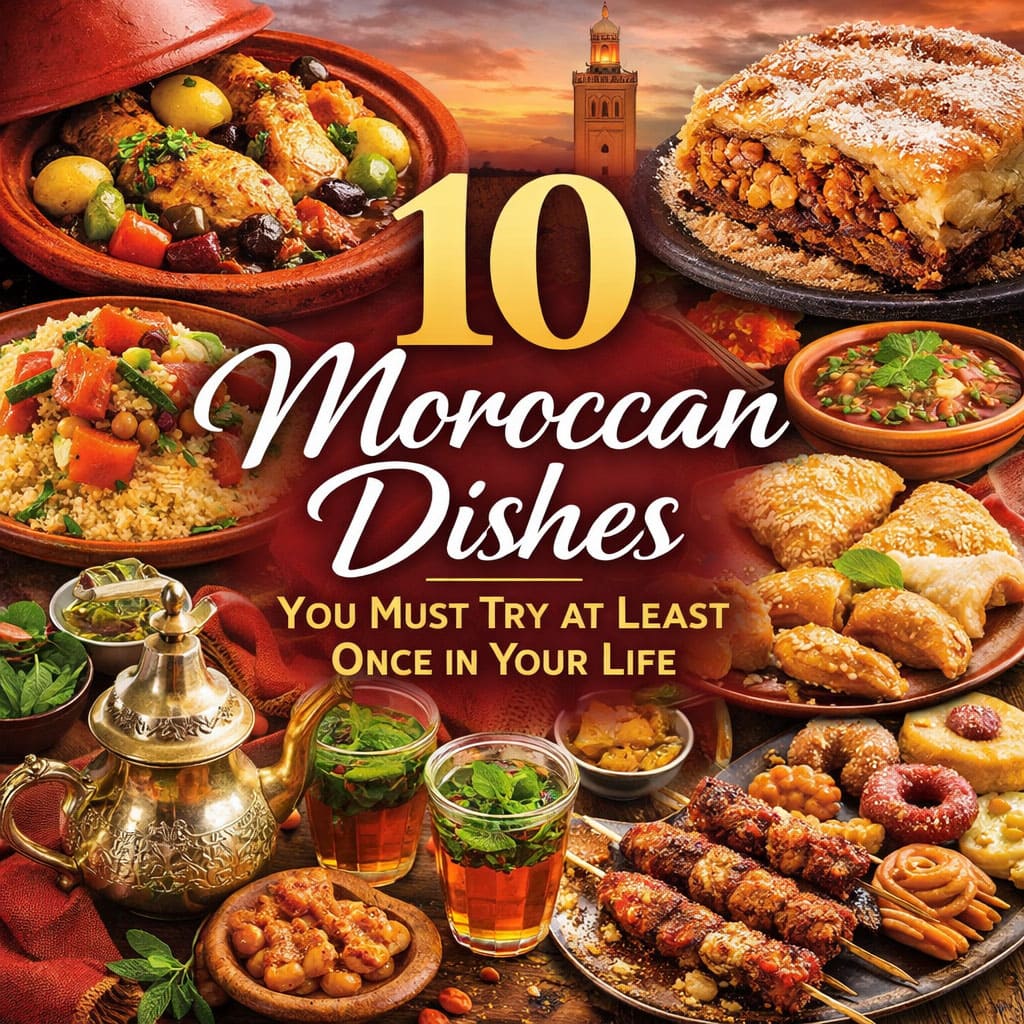
Morocco is not just a destination, but a sensory feast. Tucked between the Atlantic Ocean and the Sahara Desert, this North African gem has cultivated one of the world’s most distinctive and flavorful cuisines. Moroccan food is a vibrant tapestry woven from Berber, Arab, Andalusian, and Mediterranean influences, where every dish tells a story of trade routes, family traditions, and centuries-old cooking techniques. From the aromatic steam rising from a clay tagine to the communal joy of Friday couscous, these traditional Moroccan dishes offer more than sustenance—they’re edible expressions of Moroccan hospitality, history, and soul. Whether you’re planning your first visit or dreaming of returning, these ten authentic Moroccan dishes will transform how you understand this remarkable culinary culture.
Tagine: Morocco’s Iconic Slow-Cooked Masterpiece
The tagine is perhaps the most recognizable symbol of Moroccan cuisine, named after the distinctive conical clay pot in which it’s cooked. This slow-braised stew combines tender meat or fish with vegetables, dried fruits, and a complex blend of spices that create layers of flavor impossible to replicate in ordinary cookware.
What makes tagine special:
- The conical lid circulates steam, keeping ingredients moist and infusing flavors
- Sweet and savory combinations (like lamb with prunes or chicken with preserved lemons)
- Regional variations across Morocco’s diverse landscapes
In Marrakech’s medina, you’ll find lamb tagine with apricots and almonds, while coastal Essaouira specializes in fish tagine with chermoula. Families typically prepare tagine for leisurely lunches, letting the pot simmer for hours while conversation flows.
The true art of tagine lies in the balance of spices—cumin, ginger, saffron, and cinnamon dance together without overpowering the main ingredients. When traveling with experts like Dahbi Morocco Tours, you’ll discover that authentic tagine tastes dramatically different from restaurant versions, especially when prepared in a rural Berber home where recipes have passed through generations unchanged.
Travel tip: Visit a local potter in Safi or Fez to see traditional tagine pots being handcrafted, then use one in a cooking class to truly understand this cornerstone of Moroccan food culture.
Couscous: The Friday Tradition That Unites a Nation
Every Friday across Morocco, the same ritual unfolds in homes from Tangier to Zagora: families gather for couscous. This semolina grain dish, steamed to fluffy perfection and crowned with vegetables and meat, represents more than a meal—it’s a weekly celebration of togetherness.
The Friday couscous tradition:
- Prepared in a couscoussier (special two-tiered steamer)
- Typically features seven vegetables for good fortune
- Served communally, with everyone eating from the same platter
The secret to exceptional couscous lies in the steaming technique, repeated three times with hand-working between each round to prevent clumping. Grandmothers are the undisputed masters, their hands moving with practiced precision to fluff each grain.
Regional interpretations vary beautifully. In the north, you’ll encounter couscous topped with caramelized onions and raisins (tfaya). The Atlas Mountains offer couscous with fresh vegetables and aromatic herbs. Coastal cities sometimes incorporate fish, while inland areas favor lamb or chicken.
Cultural insight: A Moroccan home’s invitation to Friday couscous is a profound gesture of friendship. If you’re fortunate enough to receive this invitation during your travels, accept—you’ll witness authentic Moroccan hospitality at its finest.
Pastilla: The Sweet-Savory Delicacy Fit for Royalty
Pastilla (or b’stilla) is Morocco’s most sophisticated dish, a stunning pie that marries the unexpected—delicate phyllo pastry, spiced pigeon or chicken, almonds, and a dusting of powdered sugar and cinnamon. This is traditional Moroccan cuisine at its most refined.
What defines pastilla:
- Originally created for Fez’s aristocracy and special occasions
- Contrasts savory filling with sweet topping
- Requires exceptional skill to assemble the paper-thin layers
The filling typically combines shredded meat cooked with onions, saffron, and ginger, layered with scrambled eggs enriched with herbs, then topped with almonds ground with orange blossom water and sugar. Everything is enclosed in buttery warqa pastry (similar to phyllo) and baked until golden and crisp.
Traditionally reserved for weddings, celebrations, and honored guests, pastilla showcases Morocco’s Andalusian heritage. The dish traces back to Moorish refugees who brought their culinary sophistication from Spain in the 15th century.
Where to try it: While available in upscale restaurants, the most memorable pastilla comes from family celebrations. Culinary-focused tours can arrange visits to home kitchens where you’ll see this labor-intensive masterpiece created from scratch.
Harira: The Soup That Breaks the Fast
As the sun sets during Ramadan, the call to prayer echoes across Morocco, and families gather around steaming bowls of harira. This hearty tomato-based soup, thick with lentils, chickpeas, and lamb, isn’t just Ramadan fare—it’s enjoyed year-round as comfort food.
Harira essentials:
- Tomato broth enriched with flour and egg mixture for velvety texture
- Fresh herbs (cilantro and parsley) added at the end
- Traditionally served with dates and chebakia (sesame cookies)
The soup’s consistency should coat the spoon, achieved through tedwa—a traditional thickening technique using flour whisked into liquid. Every household has their version, with some adding rice or broken vermicelli, others preferring just legumes.
Street vendors sell harira from large copper urns during winter months, ladling it into bowls for workers needing warming sustenance. The aroma of simmering harira, perfumed with celery, ginger, and cinnamon, signals evening arrival in medinas nationwide.
Insider knowledge: The best harira appears in small neighborhood spots where locals line up before sunset during Ramadan. Ask your guide to show you these hidden gems—they’re never in guidebooks but offer the most authentic Moroccan food experiences.
Mechoui: Celebration Lamb Roasted to Perfection
When Moroccans celebrate—weddings, religious festivals, family milestones—mechoui takes center stage. This whole lamb, slow-roasted until the meat falls from the bone, represents abundance, generosity, and communal joy.
The mechoui tradition:
- Lamb seasoned simply with cumin, salt, and butter
- Traditionally cooked in underground earth ovens
- Meat so tender it’s eaten with hands; no utensils needed
The preparation is an event in itself. The lamb roasts for hours, sometimes overnight, basting in its fat until the exterior achieves a crispy, golden crust while the interior remains impossibly succulent. In rural areas, you might witness traditional pit roasting, where the lamb cooks buried in earth with hot coals.
The serving ritual is equally important. The lamb arrives on a massive platter, and diners tear off pieces, dipping them in cumin and salt. Starting with the most tender cuts near the ribs, the meal progresses with everyone sharing from the same animal—a powerful symbol of unity.
Travel experience: Dahbi Morocco Tours can arrange visits to rural villages during festivals where you’ll participate in authentic mechoui celebrations, experiencing Moroccan hospitality and food culture in its most genuine form.
Rfissa: The Mother’s Comfort Dish
Rfissa holds special significance in Moroccan culture as the traditional dish prepared for new mothers. This hearty combination of shredded msemen (Moroccan flatbread), tender chicken, lentils, and fenugreek-scented broth provides nourishment believed essential for postpartum recovery.
What makes rfissa unique:
- Fenugreek (helba) gives distinctive, slightly bitter flavor
- Layers of torn bread soak up rich broth
- Often includes smen (fermented butter) for depth
The preparation involves cooking chicken with onions, saffron, and generous fenugreek until falling apart, then layering torn msemen or trid (crispy flatbread) in the serving dish and drenching it with the aromatic broth. The bread softens while absorbing all the flavors, creating a dish that’s simultaneously comforting and intensely flavorful.
While traditionally reserved for new mothers, many Moroccan families now prepare rfissa for special Sunday lunches or family gatherings. Each region adds its signature—some include chickpeas or lentils, others add extra smen for richness.
Cultural note: The fenugreek in rfissa isn’t just for flavor—Moroccans believe it has medicinal properties that aid milk production and recovery. This intersection of food and folk medicine is central to understanding authentic Moroccan food traditions.
Tanjia: Marrakech’s Bachelor Stew
Born in the medina of Marrakech, tanjia is unlike any other Moroccan dish. This meat stew is cooked in an urn-shaped clay pot sealed with parchment and buried in the dying embers of public hammam (bathhouse) furnaces, where it slow-cooks for hours.
The tanjia tradition:
- Originally a bachelor’s meal (requiring minimal effort)
- Cooked at the hammam furnace, not at home
- Simple ingredients: lamb, preserved lemons, garlic, and spices
Men would prepare their tanjia pot in the morning, deliver it to the local hammam furnace keeper, then retrieve it hours later—perfectly cooked and ready to share with friends. The slow, gentle heat and sealed cooking environment create extraordinarily tender meat infused with concentrated flavors.
Unlike tagine, tanjia contains no vegetables, just meat with preserved lemon, generous garlic, olive oil, cumin, and saffron. The result is intensely flavored, falling-apart tender lamb with a jammy, reduced sauce that’s perfect for soaking up with Moroccan bread.
Where to experience it: While restaurants in Marrakech serve tanjia, the authentic experience involves visiting a traditional hammam where furnaces still cook these pots. Some culinary tours include this fascinating glimpse into disappearing Moroccan street food traditions.
Moroccan Street Food: Maakouda and Brochettes
Morocco’s streets pulse with food culture. From dawn until late night, vendors grill, fry, and steam an incredible array of snacks that reveal the soul of Moroccan cuisine beyond restaurant walls.
Street food highlights:
Maakouda – These crispy potato fritters, seasoned with cumin and parsley, are Morocco’s answer to the croquette. Served in bread with harissa and sometimes topped with fried egg, they’re the ultimate street breakfast.
Brochettes – Skewered and grilled meat (kefta, lamb, or chicken) seasoned with cumin, paprika, and onion. The smoke, char, and spices create irresistible flavors best enjoyed at outdoor grills in Jemaa el-Fnaa square or local souks.
Other street favorites:
- Snail soup (babouche) in Marrakech’s markets
- Merguez sandwiches with spicy North African sausage
- Sardine sandwiches in coastal cities
- Sfenj (Moroccan donuts) with morning coffee
Street food offers the most direct connection to how Moroccans actually eat daily. These aren’t dishes created for tourists—they’re what working people grab between errands, what students eat after school, what friends share while catching up.
Safety and authenticity: Look for busy vendors with high turnover—fresh ingredients and popularity signal quality. When exploring Morocco’s culinary scene with knowledgeable guides, you’ll discover the best street food spots that maintain generations-old recipes.
Moroccan Pastries and Mint Tea: The Art of Hospitality
No exploration of traditional Moroccan dishes is complete without the national ritual: mint tea and pastries. This isn’t merely dessert—it’s an art form, a meditation, and the foundation of Moroccan hospitality.
The mint tea ceremony:
- Gunpowder green tea steeped with fresh mint and copious sugar
- Poured from height to create foam
- Served in ornate glasses, typically three rounds
The saying goes: “The first glass is gentle like life, the second is strong like love, the third is bitter like death.” This ritualistic tea drinking punctuates every social interaction, business negotiation, and family gathering.
Essential Moroccan pastries:
Chebakia – Sesame cookie shaped like a flower, fried and dipped in honey, traditionally served during Ramadan
Ghriba – Crumbly almond or coconut cookies that dissolve on the tongue
Kaab el ghzal – “Gazelle horns” filled with almond paste and orange blossom water
Briouat – Triangle pastries filled with almonds, fried until crispy, and drizzled with honey
These sweets showcase Morocco’s mastery of honey, almonds, orange blossom water, and sesame—ingredients that trace back to Andalusian and Middle Eastern influences. They’re not everyday indulgences but special occasion treats that appear during religious holidays, weddings, and celebrations.
Cultural immersion: Accepting tea is accepting friendship in Morocco. The preparation and serving process might take 20 minutes, but rushing is considered disrespectful. Embrace the slow pace—it’s where genuine connection happens.
Berber Bread and Amlou: Atlas Mountain Tradition
In the Berber villages dotting Morocco’s Atlas Mountains, two humble foods represent centuries of tradition: round, rustic bread baked in communal ovens and amlou, a rich spread made from argan oil, almonds, and honey.
Berber bread (khobz):
- Baked in wood-fired communal ovens
- Each family’s bread marked for identification
- Eaten with every meal, used as utensil and accompaniment
The bread-making process is deeply social. Women prepare dough at home, then carry their loaves to the neighborhood ferran (public oven), where the baker arranges them in the scorching heat. The marking system ensures everyone retrieves their own bread, and the walk to the ferran serves as a daily social connection.
Amlou – liquid gold of Morocco:
- Argan oil (indigenous to Morocco) blended with roasted almonds and honey
- Spreadable consistency, nutty-sweet flavor
- Berber breakfast staple, now gaining international recognition
Amlou represents the intersection of Morocco’s unique ingredients and traditional wisdom. Only in southwestern Morocco do argan trees thrive, and Berber women’s cooperatives have perfected the labor-intensive process of extracting oil over millennia.
Authentic experience: Visiting a Berber village through culturally sensitive operators like Dahbi Morocco Tours provides opportunities to participate in bread-making, witness argan oil production, and share breakfast with families who maintain these traditions as their ancestors did centuries ago.
The combination of warm bread, creamy amlou, and mint tea constitutes the perfect Berber breakfast—simple ingredients elevated through quality and tradition.
Conclusion: Morocco Awaits Your Palate
These ten Moroccan dishes represent more than exceptional flavors—they’re living connections to history, family, and the generous spirit that defines Moroccan culture. From the communal Friday couscous that brings families together to the solitary bachelor’s tanjia slowly cooking in hammam embers, each dish tells stories of the people, landscapes, and traditions that shaped this extraordinary cuisine.
Moroccan food rewards those who venture beyond surface-level tourism. The most memorable meals happen in home kitchens, mountain villages, and bustling street corners where recipes have evolved over generations without written records—only hands, taste, and love preserving them.
If these descriptions have stirred your appetite for authentic Moroccan cuisine, consider experiencing these dishes where they were born. A dedicated Morocco culinary tour offers immersive food experiences that transform you from observer to participant—cooking in traditional kitchens, shopping in ancient souks, and sharing meals with the families who keep these culinary traditions alive. Morocco’s table is set, and you’re invited.