

Few countries on earth wear their history as openly as Morocco. Step off the plane and you are immediately swept into a world where Arab heritage, Berber traditions, Andalusian artistry, and African rhythms have braided together over more than a thousand years. This is exactly why Morocco Cultural Tours have become one of the most rewarding ways to travel the kingdom, far richer than ticking sights off a list.
Morocco sits at a crossroads. For centuries, caravans crossed its deserts carrying gold, salt, and stories between sub-Saharan Africa and the Mediterranean. Dynasties rose and fell, leaving behind four great imperial cities, each layered with palaces, mosques, and walled medinas that still hum with daily life.
The result is a culture you can taste, hear, smell, and touch. You hear the call to prayer drift over rooftops at dusk. You smell cumin and orange blossom in a covered souk. You watch a tanner work hides exactly as his ancestors did, and you share mint tea with a Berber family who have lived in the same valley for generations.
A cultural tour of Morocco is about these encounters. It is about understanding the people, the faith, the crafts, and the landscapes that shaped one of the world’s most enduring civilisations. From the imperial grandeur of Fes to the indigo lanes of Chefchaouen and the silent dunes of the Sahara, every region tells a different chapter of the same remarkable story.
As a licensed, locally owned operator founded in 2019, Dahbi Morocco Tours has guided travellers from the USA, the UK, and across Europe into this world with care and genuine local knowledge. This guide walks you through Morocco’s cultural treasures, the best destinations and experiences, its UNESCO sites and Berber roots, a sample itinerary, and honest answers to the questions travellers ask most.
Whether you are drawn to history, food, craft, or simply the warmth of Moroccan hospitality, you will leave this page ready to plan a journey into the real Morocco.
01Why Morocco Is a Cultural Treasure
To understand why cultural tours in Morocco feel so immersive, you first have to understand how the country came to be. Morocco is not a single culture, but a living blend of many, each leaving a visible mark on the architecture, language, food, and customs you encounter today.
A Crossroads of Civilizations
Morocco occupies a unique position where Africa meets Europe, with the Atlantic on one side and the Mediterranean on the other. For thousands of years it was the western terminus of the great trans-Saharan trade routes. Goods, ideas, and people flowed through its cities, and each wave of newcomers, Phoenicians, Romans, Arabs, and Andalusian refugees, added a new layer to the cultural fabric.
This is why a single Moroccan city can feel like several worlds at once. A Roman ruin sits an hour from a medieval medina, which sits an hour from a modern art gallery. Morocco heritage tours thrive on exactly this density of history.
The Influence of Berber, Arab, African and European Cultures
The Amazigh, or Berber, people are Morocco’s original inhabitants, present long before any other group arrived. Their language, music, and traditions still form the country’s bedrock, especially in the mountains and the south.
Arab dynasties brought Islam, the Arabic language, and a tradition of scholarship and architecture from the 7th century onward. Andalusian Muslims and Jews, fleeing Spain, brought refined music, craftsmanship, and urban culture that shaped cities like Fes and Tetouan. From the south came African influences in rhythm and spirituality, most famously in Gnawa music. The European presence, particularly French and Spanish, added another modern layer.
Today these threads coexist rather than compete. You will hear Arabic, Tamazight, French, and Spanish in a single day, and see it all reflected in Morocco’s traditions and culture.
Morocco’s Rich Historical Legacy
Morocco is home to four imperial cities, Marrakech, Fes, Meknes, and Rabat, each having served as a royal capital at some point in history. Their kasbahs, palaces, madrasas, and ramparts are not museum pieces but functioning parts of living cities. This continuity is what makes Morocco historical tours so vivid: history here is something you walk through, not something behind glass.
02The Best Cultural Destinations in Morocco
Every region of Morocco offers something distinct. These are the destinations that form the backbone of most cultural itineraries, and the cultural highlights that make each one essential.
Marrakech
The “Red City” is Morocco’s most famous cultural hub, a sensory whirlwind of colour, sound, and scent. At its heart lies the medina, a UNESCO-listed maze of alleys, and the legendary Jemaa el-Fnaa square, alive each evening with storytellers, musicians, and food stalls.
- Medina: a walled old city of mosques, fountains, and hidden courtyards
- Souks: sprawling markets selling leather, lanterns, spices, and carpets
- Palaces: the ornate Bahia Palace and the ruins of El Badi reveal royal grandeur
- Traditional riads: restored courtyard homes that are an experience in themselves
Marrakech rewards slow exploration. Get lost on purpose, then pause for tea on a rooftop overlooking the Atlas Mountains.
Fes
If Marrakech is Morocco’s showpiece, Fes is its soul. Founded in the 9th century, it is widely regarded as the country’s spiritual and intellectual capital, and its medina is one of the largest car-free urban areas in the world.
- Ancient Medina: a labyrinth of thousands of lanes, best explored with a local guide
- Tanneries: the famous Chouara tanneries, where leather is still dyed in stone vats
- Traditional craftsmanship: home to master artisans in zellige tilework, brass, and weaving
Fes is the place to understand Moroccan craft at its deepest. The University of al-Qarawiyyin here is often cited as one of the oldest continually operating institutions of higher learning in the world.
Rabat
Morocco’s capital is calm, green, and elegant, a wonderful contrast to the intensity of Fes and Marrakech. It blends deep history with contemporary culture.
- Historical monuments: the Hassan Tower, the Kasbah of the Udayas, and the Chellah necropolis
- Contemporary culture: modern museums, tree-lined boulevards, and a relaxed coastal feel
Rabat earned UNESCO recognition for the way it weaves a historic city together with thoughtful 20th-century urban planning.
Meknes
Often overlooked, Meknes is a quieter imperial city with monumental ambitions. Built up by Sultan Moulay Ismail in the 17th century, it boasts grand gates, vast granaries, and immense walls.
- Imperial heritage: the towering Bab Mansour gate and the Heri es-Souani granaries
Meknes pairs beautifully with a visit to nearby Volubilis, making it a rewarding stop for travellers who want history without the crowds.
Chefchaouen
Tucked into the Rif Mountains, Chefchaouen is famous for its dreamlike blue-washed lanes. Beyond the photogenic walls lies a distinct mountain culture shaped by Andalusian refugees centuries ago.
- Blue city culture: relaxed, artisanal, and deeply welcoming, with strong Andalusian roots
It is a place to slow down, browse handmade crafts, and enjoy the gentle pace of northern Morocco.
Sahara Desert
No cultural journey feels complete without the desert. Around Merzouga and the dunes of Erg Chebbi, you encounter a way of life shaped by sand, sky, and silence.
- Nomadic traditions: communities that still move with the seasons and the herds
- Berber hospitality: generous, warm, and centred on tea and shared meals
- Music and storytelling: drumming and songs passed down around the fire
A night in a desert camp under a brilliant canopy of stars is, for many travellers, the emotional high point of their trip.
03Top Cultural Experiences Every Traveler Should Try
Sights are only half the story. The most memorable cultural tours in Morocco are built around hands-on experiences that connect you with local people. Here are the ones worth prioritising, each with a practical tip.
- Traditional cooking classes: Learn to make tagine and couscous from a local cook. Tip: choose a class that begins with a market visit so you understand the ingredients first.
- Local markets and souks: Wander the souks for spices, textiles, and metalwork. Tip: browse first, then haggle politely with a smile, it is expected and part of the fun.
- Staying in a traditional riad: Sleep in a restored courtyard home rather than a chain hotel. Tip: book a riad inside the medina for atmosphere, but arrange a porter, as cars cannot enter.
- Camel trekking in the Sahara: Ride into the dunes at sunset toward a desert camp. Tip: wrap a scarf around your head for sun and sand, and bring a warm layer for the night.
- Berber village visits: Meet families in the Atlas Mountains and share tea. Tip: accept the hospitality graciously, and a small, useful gift is appreciated rather than expected.
- Tea ceremonies: Watch mint tea poured from a height into small glasses. Tip: the first pour is often returned to the pot, the ritual is part of the welcome.
- Artisan workshops: See zellige tile cutting, weaving, or leatherwork up close. Tip: buying directly from the maker supports the craft and gets you a fairer price.
- Moroccan music and dance: Experience Gnawa rhythms or Andalusian melodies live. Tip: ask your guide about local festivals or evening performances during your dates.
- Local festivals: Time your trip around a moussem or arts festival if you can. Tip: book accommodation early, as popular festivals fill rooms quickly.
- Traditional hammam: Visit a steam bath for a deeply local ritual of cleansing. Tip: a public hammam is authentic and cheap; a spa hammam is gentler for first-timers.
04Discovering Morocco’s UNESCO World Heritage Sites
Morocco protects a remarkable number of cultural landmarks. According to UNESCO, the country has multiple World Heritage Sites, several of which sit at the centre of any serious cultural itinerary. These designations recognise outstanding universal value, and visiting them is the clearest window into Morocco’s past.
| UNESCO Site | Location | Why It Matters |
|---|---|---|
| Medina of Fes | Fes | One of the world’s largest living medieval cities and a centre of learning |
| Ait Ben Haddou | Near Ouarzazate | A stunning fortified earthen village on an ancient caravan route |
| Medina of Marrakech | Marrakech | Historic imperial city with palaces, gardens, and bustling souks |
| Historic City of Meknes | Meknes | Grand 17th-century imperial capital of Sultan Moulay Ismail |
| Volubilis | Near Meknes | Morocco’s finest Roman archaeological site, with mosaics intact |
| Rabat | Rabat | A modern capital that preserves its layered historic heart |
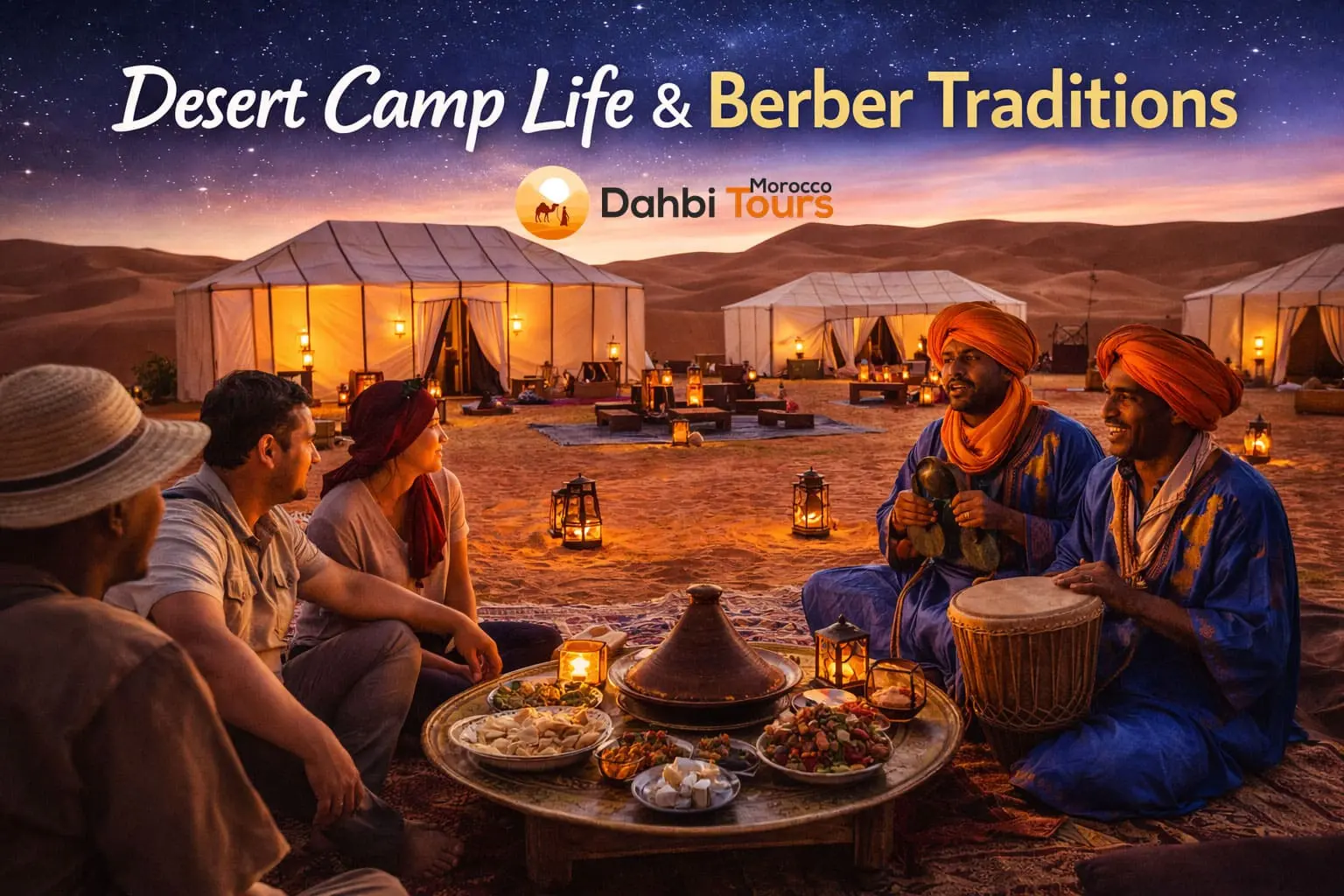
Each site reveals a different era, from Roman Volubilis to medieval Fes and imperial Meknes. Touring them with a knowledgeable guide turns scattered stones into a coherent story.
05Understanding Berber Culture in Morocco
You cannot truly understand Morocco without understanding its Berber, or Amazigh, heritage. The Amazigh are the indigenous people of North Africa, and their identity runs through the entire country, especially its mountains and deserts.
- History of the Amazigh people: Present in North Africa for thousands of years, the Amazigh predate Arab arrival and have preserved a distinct identity through every era.
- Language: Tamazight is now an official language of Morocco alongside Arabic, written in the distinctive Tifinagh script you will see on signs.
- Traditional customs: Community, family, and hospitality are central, with strong oral traditions of poetry and storytelling.
- Architecture: Earthen kasbahs and ksour, built from rammed earth, blend perfectly into the landscape and stay cool in the heat.
- Clothing: The hooded djellaba and brightly woven garments carry regional patterns that signal where a person is from.
- Cuisine: Hearty, seasonal dishes such as tagine and berber omelette reflect a culture rooted in the land.
- Music: Rhythmic drumming, call-and-response singing, and the ahidous group dance are central to celebrations.
- Hospitality traditions: A guest is treated as a gift. Refusing tea can cause mild offence, so accept the glass and enjoy the welcome.
Spend an afternoon with a Berber family in the Atlas, and you will understand why so many travellers describe Moroccan warmth as the highlight of their trip. This is the heart of authentic Morocco experiences.
06Moroccan Food Culture: A Journey Through Flavors
Moroccan cuisine is one of the world’s great food traditions, and it mirrors the country’s cultural diversity perfectly. Berber staples, Arab spices, Andalusian refinement, and African ingredients all meet on the same plate.
| Dish | What to Know |
|---|---|
| Tagine | A slow-cooked stew named after its conical clay pot; endless regional variations of meat, vegetables, and fruit |
| Couscous | Steamed semolina served with vegetables and meat, traditionally the Friday family meal |
| Pastilla | A sweet-savoury pie of poultry, almonds, and cinnamon wrapped in thin pastry; Andalusian in origin |
| Harira | A hearty tomato, lentil, and chickpea soup, especially beloved during Ramadan |
| Mint tea | Green tea with fresh mint and sugar, the national drink and a symbol of hospitality |
| Regional specialties | Seafood on the coast, dates and desert breads in the south, and Fassi refinement in Fes |
Food in Morocco is about sharing. Meals are communal, eaten from a central dish, and dining with locals is one of the most genuine ways to experience the culture. Many of the best cultural experiences in Morocco happen around a table.
07Morocco Cultural Tours for Families
Morocco is a surprisingly wonderful destination for families. Children are warmly welcomed everywhere, and the variety of experiences keeps young travellers genuinely engaged, from camel rides to cooking classes.
- Educational experiences: Markets, kasbahs, and craft workshops turn history and geography into something children can see and touch.
- Child-friendly cultural activities: Camel trekking, pottery painting, and bread-baking with a local family are hands-on and memorable.
- Family-friendly accommodations: Many riads and desert camps offer family rooms and flexible meals to suit younger palates.
- Safety and comfort: Private transport, trusted guides, and a gentle pace make travel with children smooth and low-stress.
Travelling as a family takes planning, which is why a tailored itinerary makes such a difference. Explore our Family Tours in Morocco to see how a private, paced journey can keep every generation happy, from grandparents to toddlers.
08Luxury Cultural Travel in Morocco
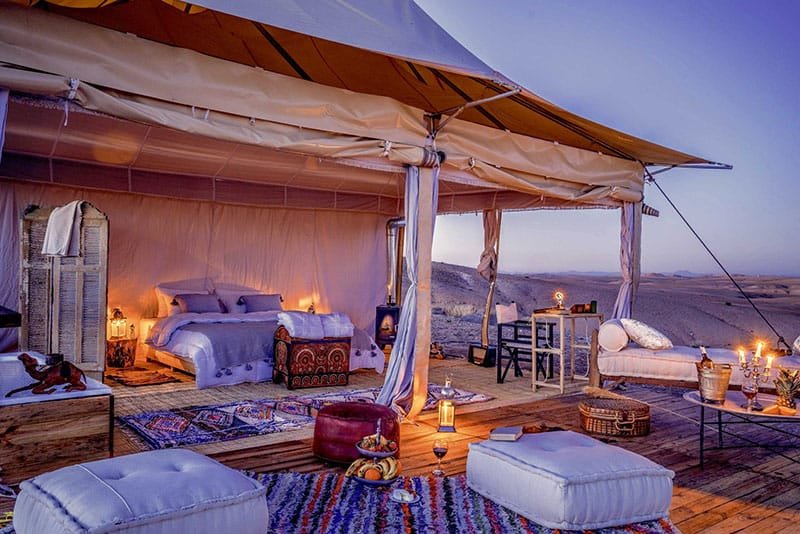
For travellers who want culture wrapped in comfort, Morocco delivers extraordinary luxury. The kingdom’s tradition of hospitality lends itself beautifully to high-end travel, without ever losing its authenticity.
- Luxury riads: Exquisitely restored courtyard mansions with plunge pools, hammams, and rooftop dining.
- Private guides: Expert historians and storytellers who open doors that independent travellers rarely find.
- Exclusive cultural encounters: Private dinners in palaces, after-hours museum visits, and meetings with master artisans.
- Luxury desert camps: En-suite tents with fine linens and gourmet meals beneath the Sahara’s stars.
- High-end transportation: Chauffeured 4x4s and modern vehicles with experienced, English-speaking drivers.
If you dream of experiencing the kingdom’s heritage in style, our Luxury Morocco Tours combine the finest accommodations with deeply personal cultural access, the best of both worlds.
09Why Choose Dahbi Morocco Tours for Your Cultural Adventure
Choosing the right local partner is the difference between seeing Morocco and truly understanding it. Here is why travellers from around the world trust Dahbi Morocco Tours with their cultural journey.
- Local expertise: We are a licensed, locally owned company founded in 2019, led by Moroccans who were born into these traditions, including co-founder Houssain Dahbi.
- Private, customised itineraries: Every journey is built around your interests, pace, and budget, never a fixed group schedule.
- Authentic cultural encounters: We connect you with real families, artisans, and communities rather than staged tourist stops.
- Family and luxury options: From relaxed family adventures to refined luxury escapes, we tailor the comfort level to you.
- Multilingual guides: Our team communicates comfortably in English and other languages, so nothing is lost in translation.
- Sustainable tourism practices: We work with local businesses and communities, keeping tourism’s benefits where they belong.
Ready to go beyond the surface? Discover our full range of Morocco Cultural Tours and let us craft a private journey into the kingdom’s living heritage, designed entirely around you.
10Suggested 10-Day Morocco Cultural Tour Itinerary
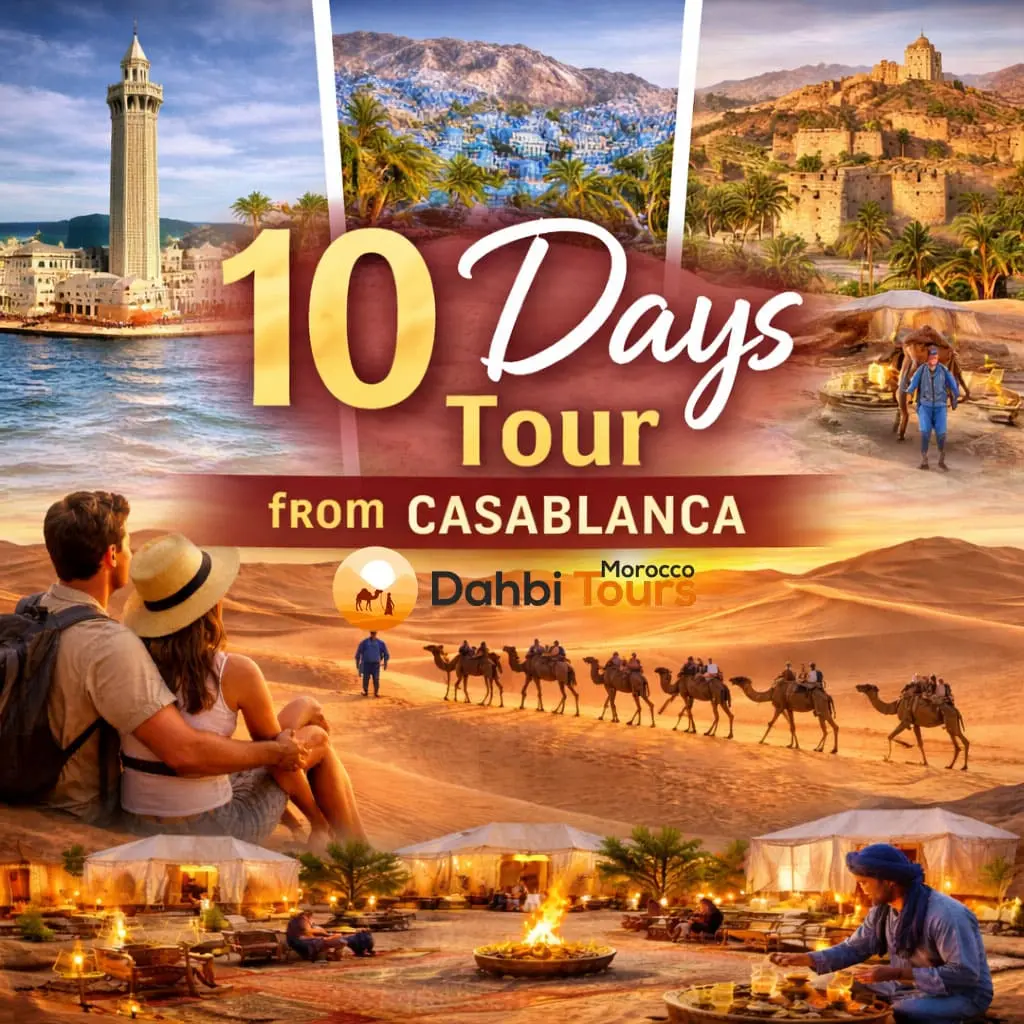
Ten days is the ideal length to experience Morocco’s cultural diversity without rushing. This sample Morocco cultural itinerary loops from the coast through the imperial cities, the Sahara, and the southern valleys to Marrakech.
| Day | Destination | Highlights |
|---|---|---|
| Day 1 | Casablanca | Arrival and the vast Hassan II Mosque on the Atlantic shore |
| Day 2 | Rabat | Hassan Tower, Kasbah of the Udayas, and the capital’s relaxed culture |
| Day 3 | Chefchaouen | The blue city’s mountain lanes, crafts, and Andalusian atmosphere |
| Day 4–5 | Fes | Volubilis en route, then two days exploring the great medina and tanneries |
| Day 6 | Midelt & Atlas Mountains | Cedar forests, mountain scenery, and Berber villages |
| Day 7 | Merzouga Desert | Camel trek into Erg Chebbi and a night in a desert camp |
| Day 8 | Dades Valley | Todra Gorge, kasbahs, and dramatic rock formations |
| Day 9 | Ait Ben Haddou & Marrakech | UNESCO ksar, the Tizi n’Tichka pass, and arrival in Marrakech |
| Day 10 | Marrakech | Medina, souks, palaces, and Jemaa el-Fnaa before departure |
This route can be shortened, extended, or upgraded to luxury. As a private tour, every day is flexible around what matters most to you.
11Frequently Asked Questions
What is included in a Morocco cultural tour?
How many days do you need for a cultural tour of Morocco?
Are Morocco cultural tours family-friendly?
What should I wear during a cultural tour?
Is Morocco safe for cultural travelers?
What is the best time to visit Morocco?
Do I need a guide for a cultural tour of Morocco?
What languages are spoken in Morocco?
Can I experience authentic Berber culture on a tour?
Are Morocco cultural tours suitable for solo travelers?
What is a riad and should I stay in one?
Is it appropriate to haggle in Moroccan markets?
12Conclusion
Morocco is a country that gives generously to travellers willing to look beyond the postcard. Behind every keyhole arch and busy souk lies a story shaped by Berber resilience, Arab scholarship, Andalusian artistry, and centuries of trade across the desert. To experience all of this is to understand a culture that has welcomed strangers for a thousand years.
The most rewarding journeys here are not the fastest ones. They are the ones where you pause for tea, listen to a story, learn to fold a pastry, or watch the sun rise over the dunes in silence. These are the moments that turn a holiday into a connection, and they are exactly what thoughtful cultural travel is about.
That is the philosophy behind every trip we plan. As a licensed, locally owned operator with deep roots in these traditions, Dahbi Morocco Tours designs private, authentic, and flexible journeys for families, couples, solo travellers, and luxury seekers alike, always with genuine local knowledge at the centre.
So go beyond the typical tourist trail and discover the real kingdom. Browse our Morocco Cultural Tours, tell us what moves you, and let us craft a journey into Morocco’s living heritage that you will be talking about for years.
Dahbi Morocco Tours
Licensed, locally owned private tours across Morocco since 2019.
dahbi-moroccotours.com